How AI is Transforming Modern Enterprise ERP Platforms
Old ERP software is slow and hard to use. Learn how modern AI integration is turning enterprise ERP platforms into fast, helpful operating systems.
Umar Farooq
System Architect & Full-Stack Engineer
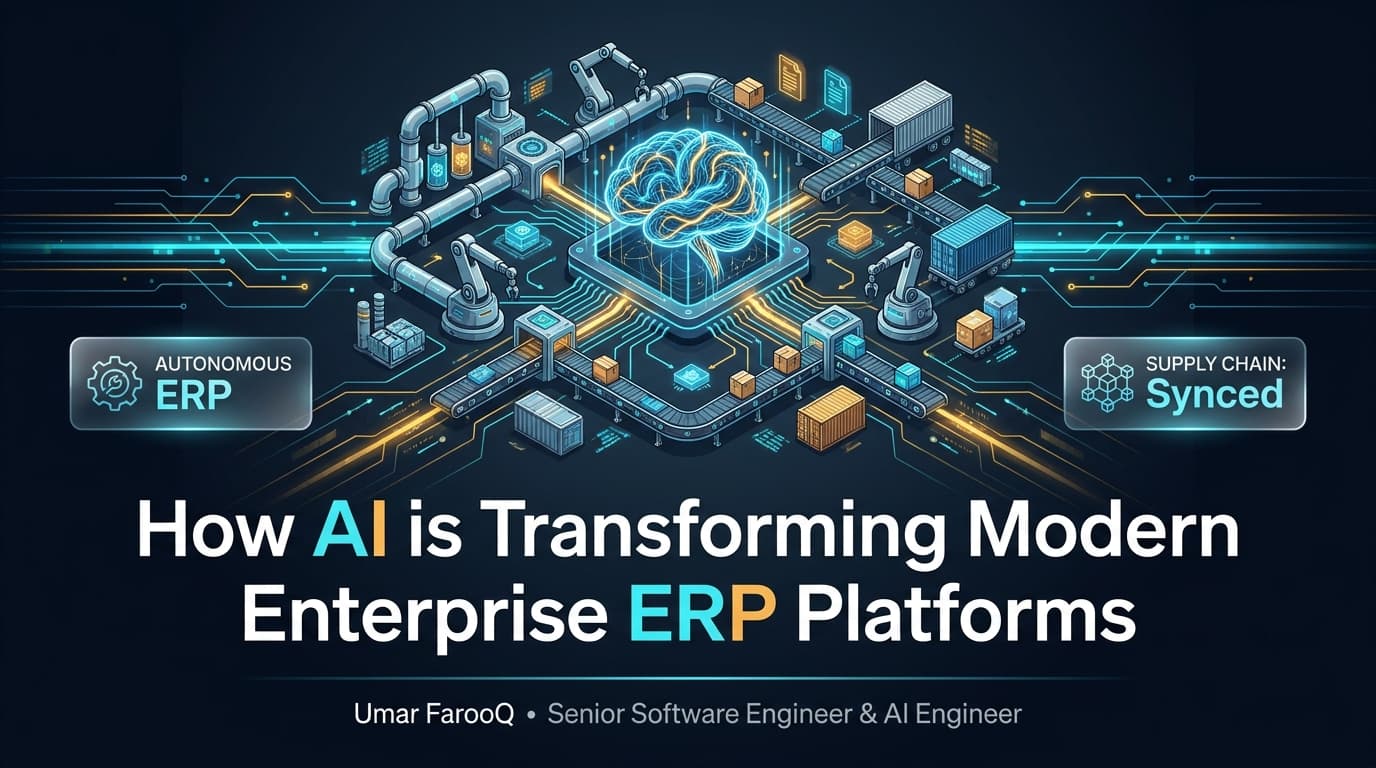
Direct Answer: Artificial intelligence is transforming modern enterprise ERP platforms by converting static transactional databases into proactive operational intelligence engines. By replacing manual paperwork processing with asynchronous document vision pipelines, forecasting inventory shortages with vector embeddings, and automating financial reconciliation, modern ERPs eliminate human data entry bottlenecks.
Enterprise Resource Planning (ERP) platforms are the operational backbone of commercial industry: managing supply chains, tracking factory floor inventory, calculating payroll, and balancing general ledgers. Yet, for decades, legacy ERPs have been notoriously cumbersome, requiring teams of data entry clerks to manually type numbers from physical delivery notes into hundreds of relational database fields.
Having engineered custom enterprise ERP systems across Saudi Arabia supporting large industrial operations and multi-warehouse logistics, I have seen how artificial intelligence fundamentally changes this equation. The transformation is not about embedding a flashy chatbot onto a corporate intranet; it is about automating high-friction data pipelines across the business.
Three Foundational Shifts in Modern ERP Architecture
Enterprise ERP modernization centers around three architectural breakthroughs:
Automated Document Ingestion: Suppliers deliver purchase orders, bills of lading, and mill test certificates in disparate, unstructured PDF files. Vision LLMs extract typed line items into structured relational tables in seconds with zero manual typing.
Real-Time Stock Anomaly Detection: Rather than relying on periodic physical inventory counts, automated models cross-reference sales velocity with supply lead times to anticipate supply bottlenecks weeks before stockouts occur.
Continuous Financial Reconciliation: Bank transaction feeds are automatically paired with customer invoices and purchase receipts, flagging discrepancies and matching 95% of accounts without human bookkeeper intervention.
Comparison: Legacy ERP Platforms vs Modern AI-Enabled ERPs
Here is how traditional ERP systems compare with modern intelligent platforms:
Operational Dimension | Legacy ERP System | Modern AI-Driven ERP Architecture |
|---|---|---|
Document Processing | Clerks manually re-type supplier PDF data | Vision LLM queues extract structured JSON instantly |
Inventory Forecasting | Static threshold alerts based on historical averages | Dynamic predictive forecasting factoring real lead times |
System Accessibility | Complex desktop clients requiring weeks of training | Modern Next.js web applications with role-based dashboards |
Search & Discovery | Rigid SQL exact matches and manual ID queries | Semantic vector search across inventory and customer logs |
Error Resolution | Discrepancies discovered during monthly accounting close | Continuous real-time auditing and automated exception flags |
Production Implementation: Asynchronous Document Extraction Queue
Below is a production-proven Laravel queued job architecture utilizing modern AI SDKs to process incoming supplier delivery slips asynchronously, pairing with background queues managed by Laravel Horizon:
// app/Jobs/ProcessSupplierInvoiceJob.php
namespace App\Jobs;

use App\Models\SupplierInvoice;
use App\Services\AIService;
use Illuminate\Bus\Queueable;
use Illuminate\Contracts\Queue\ShouldQueue;
use Illuminate\Foundation\Bus\Dispatchable;
use Illuminate\Queue\InteractsWithQueue;
use Illuminate\Queue\SerializesModels;
use Illuminate\Support\Facades\DB;

class ProcessSupplierInvoiceJob implements ShouldQueue
{
    use Dispatchable, InteractsWithQueue, Queueable, SerializesModels;

    public int $tries = 3;
    public int $timeout = 120;

    public function __construct(public SupplierInvoice $invoice) {}

    public function handle(AIService $ai): void
    {
        // Extract structured JSON payload from uploaded PDF document
        $parsedData = $ai->extractInvoiceData($this->invoice->file_path);

        DB::transaction(function () use ($parsedData) {
            $this->invoice->update([
                'invoice_number' => $parsedData['invoice_number'],
                'total_amount'   => $parsedData['total_amount'],
                'tax_amount'     => $parsedData['tax_amount'],
                'parsed_status'  => 'completed',
            ]);

            foreach ($parsedData['line_items'] as $item) {
                $this->invoice->items()->create([
                    'product_sku' => $item['sku'],
                    'quantity'    => $item['qty'],
                    'unit_price'  => $item['price'],
                ]);
            }
        });
    }
}
Event-Driven Architecture for Enterprise Reliability
Connecting ERP modules through asynchronous event listeners ensures that sudden spikes in purchase orders never lock the main financial ledger. By dispatching domain events across Redis message brokers, invoice processing, warehouse alerts, and supplier updates execute independently without single-point-of-failure risks.
Ensuring Data Sovereignty & Security Compliance
When architecting ERP systems for enterprise clients across the GCC and international markets, data privacy and regulatory compliance are non-negotiable. Implementing zero-data-retention agreements with enterprise AI providers and hosting local vector databases ensures that confidential corporate pricing and supplier terms remain strictly confidential.
Frequently Asked Questions
Can AI reliably extract line items from messy scanned PDFs?
Yes. Modern multimodal models achieve over 98% accuracy on scanned receipts and handwritten notes when paired with structured JSON schema outputs. For edge cases or low-resolution scans, systems automatically flag the record for human verification before posting to the ledger.
Do we need to replace our existing ERP to use AI?
No. Many enterprise clients prefer building an intelligent modernization layer on top of their existing database. By deploying a modern Next.js frontend with automated ingestion queues, you can modernize workflows without executing a risky, multi-million dollar core database replacement.
How long does an ERP modernization project take?
Targeted automation modules—such as automated invoice parsing or smart inventory reordering—can be deployed in four to eight weeks, delivering immediate operational ROI before expanding to other departments.
Summary & Strategic Value
Industry benchmarks and authoritative engineering standards validate this methodology; explore Gartner Research on Autonomous Enterprise Applications for in-depth technical specifications and architectural trade-offs observed in high-scale enterprise environments.
Modernizing enterprise ERP systems with artificial intelligence is the single highest-leverage investment an industrial business can make. Eliminating manual data entry frees teams to focus on supplier relationships, factory throughput, and commercial expansion.
In our enterprise Laravel backend services and Next.js SaaS application practice, we architect custom ERP platforms tailored to real-world industrial scale.
To discover more about our enterprise engineering track record, visit my About Me page or explore case studies on our Engineering Blog.
Planning to modernize your enterprise ERP or automate manual back-office pipelines? Book an architecture consultation directly on my Connect page.

Umar Farooq
Author & ConsultantSpecializes in Laravel, Next.js, and AI products. 5+ years enterprise experience with 80+ delivered platforms and full source code ownership.
Related Engineering Insights
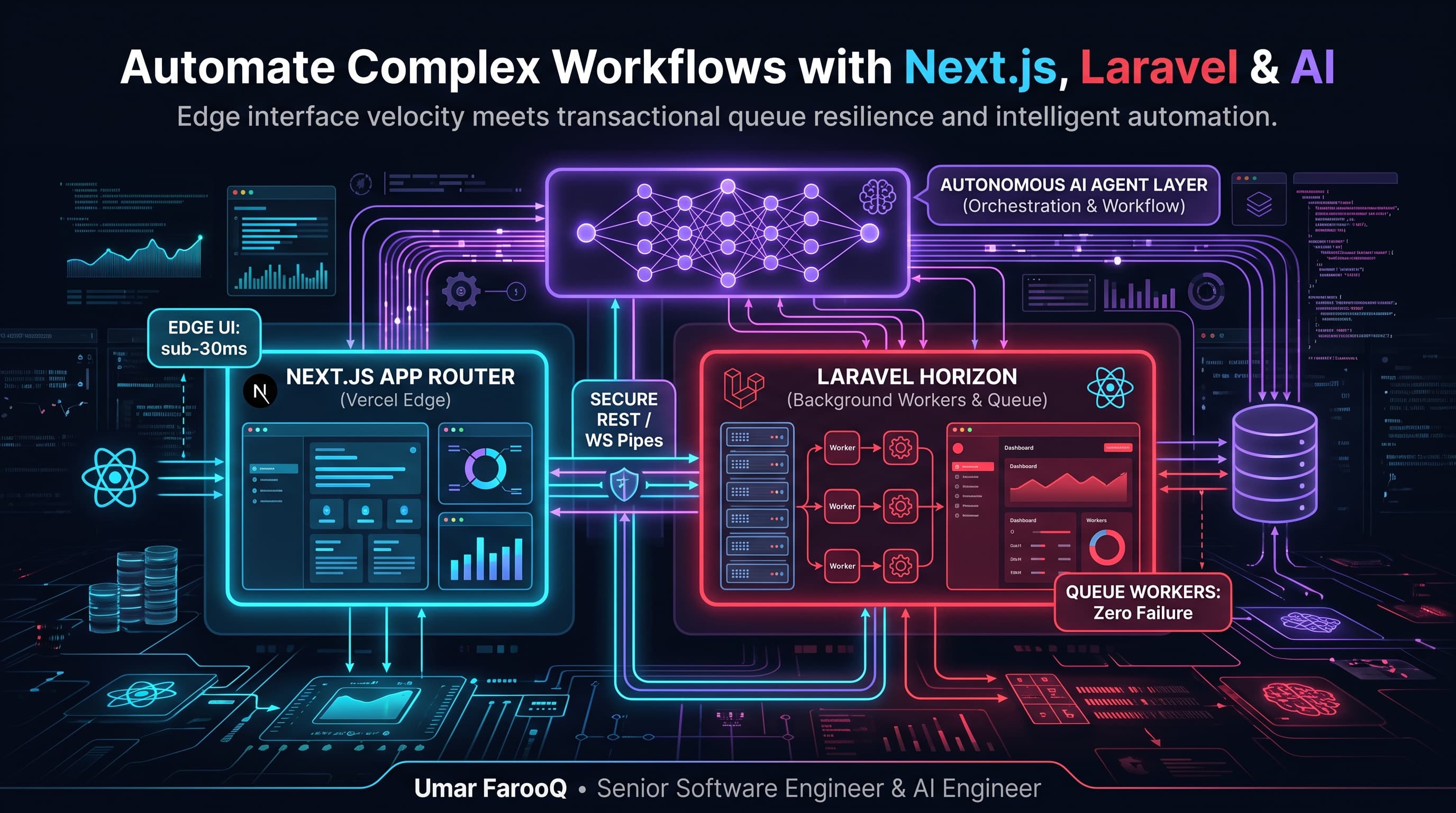
How to Automate Complex Business Workflows Using Next.js, Laravel, and AI Agents
Combine the speed of Next.js with the transactional power of Laravel and AI agents to automate complex business tasks with zero headaches.
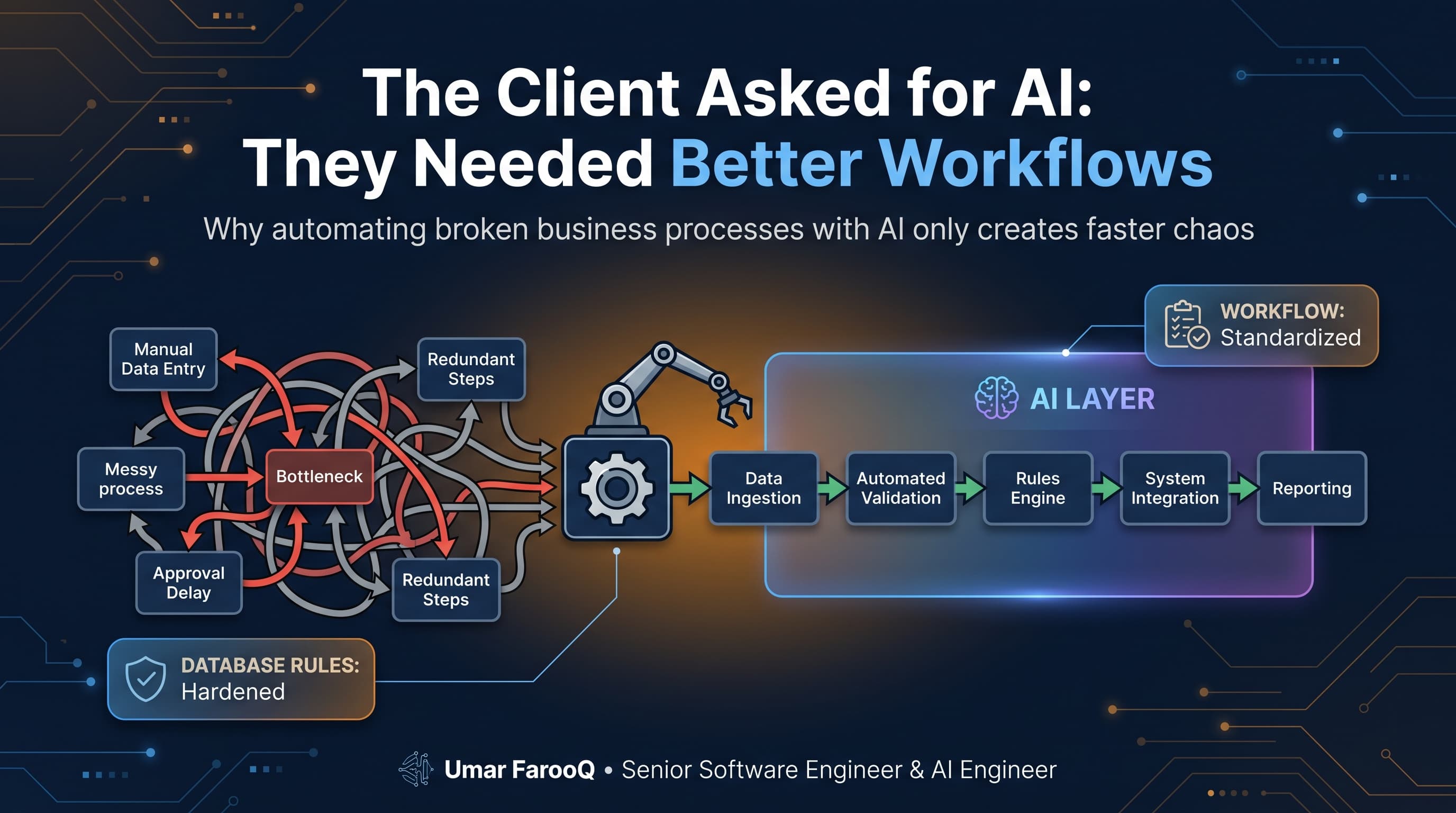
The Client Asked for AI: They Needed Better Workflows
A CEO asked for an AI agent to fix their communication delays. We analyzed their company and found 5 broken manual workflows. Why process beats buzzwords.
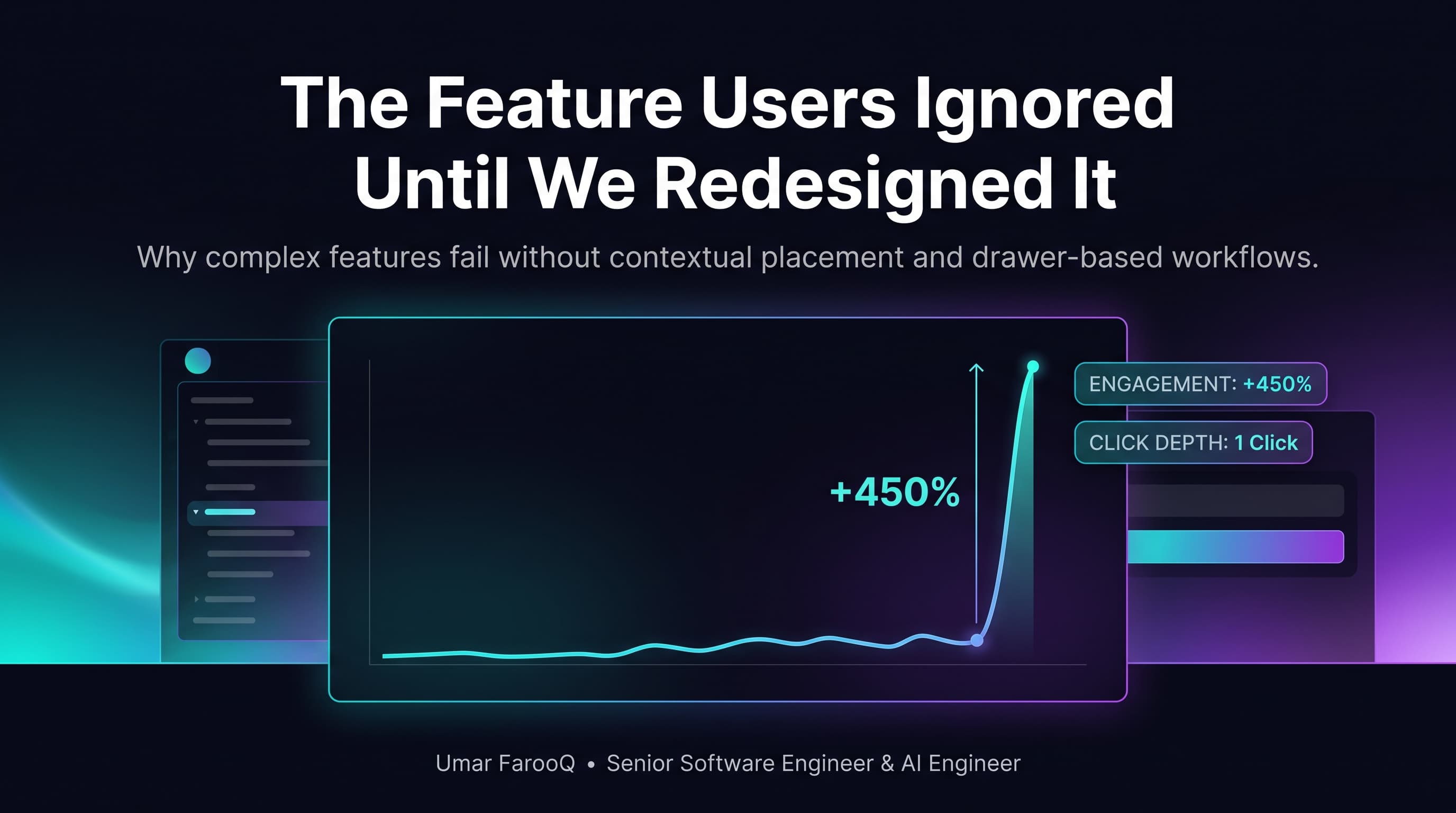
The Feature Users Ignored Until We Redesigned It
We spent months building a powerful analytics tool, but nobody clicked it. Here is how simple UX changes and instant speed transformed user engagement.