How an Unmonitored Queue Dropped Thousands of Emails
Background workers are great until they stop working in the middle of the night. How to monitor your job queue so customer emails are never lost.
Umar Farooq
System Architect & Full-Stack Engineer
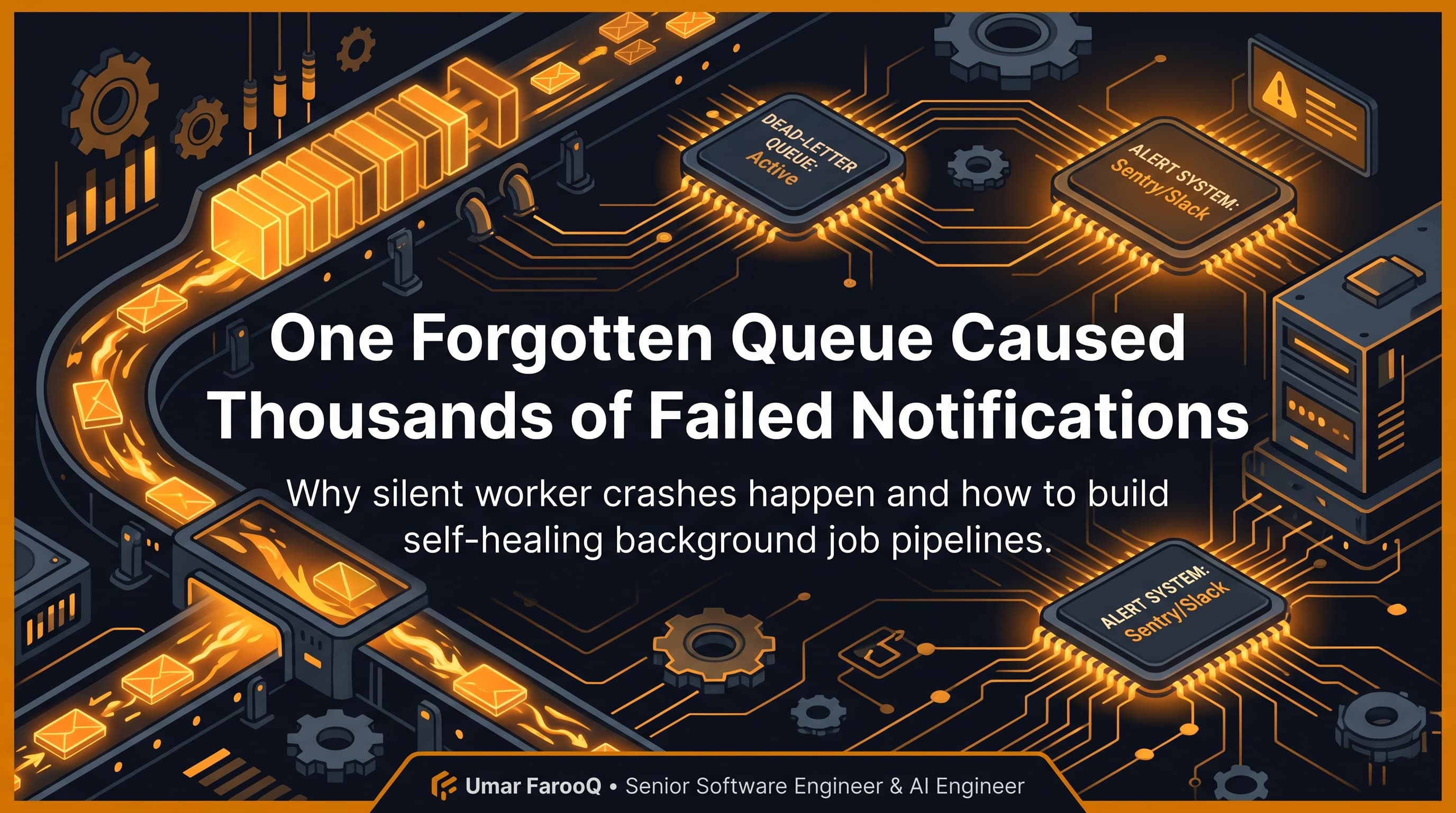
Direct Answer: Background job queues fail silently when unhandled worker exceptions, missing dead-letter queues, and Redis memory eviction silently discard failed tasks. In production, unmonitored queues can drop thousands of transactional emails without throwing application-level HTTP errors. Preventing this requires configuring persistent dead-letter queues, exponential retry backoff, and real-time failure alerts.
Decoupling slow tasks using background queues is one of the most celebrated best practices in full-stack web architecture. Offloading transactional emails, invoice generation, and third-party webhook dispatches to asynchronous Redis workers keeps web requests lightning-fast. However, moving execution to the background introduces a dangerous blind spot: silent failure.
Early in my engineering career while maintaining a logistics platform in Saudi Arabia, our team learned this lesson the hard way. A third-party email provider rotated an API authentication certificate overnight. For three days, user requests reported instant success, but zero password reset links, order confirmations, or dispatch invoices were actually delivered. Thousands of jobs were quietly discarded into a black hole.
Why Background Queues Fail Silently
When a synchronous HTTP request crashes, the user sees an error screen immediately and support tickets arrive within minutes. In contrast, background workers operate out of sight. If a worker encounters an unhandled network socket timeout and does not possess an explicit retry policy, default queue runners mark the job as completed or drop it silently to keep the queue moving.
According to queue resilience guidelines in the Laravel Queue Architecture Documentation, an unmonitored queue is an operational hazard. Systems must implement explicit retry limits, persistent failed job tables, and automated dead-letter queues (DLQs).
Comparison: Fragile Default Queue vs Resilient Production Pipeline
Here is how a baseline queue setup contrasts with an enterprise-hardened messaging pipeline:
Queue Attribute | Fragile Baseline Setup | Hardened Enterprise Queue Architecture |
|---|---|---|
Failure Handling | Silent drop after 1 attempt; no error logged | Exponential backoff with 5 retries and jitter |
Dead-Letter Storage | Discarded from memory on worker restart | Persisted in dedicated relational database failed_jobs table |
Queue Monitoring | No dashboard; status checked manually in logs | Real-time queue depth and wait-time telemetry with alerts |
Worker Health Checks | Single unmonitored process | Supervised process manager (Supervisor) auto-restarting workers |
Alerting Mechanism | None (discovered when angry customers complain) | Immediate Slack/Telegram webhook on failed job threshold |
Production Code: Resilient BullMQ Worker with Dead-Letter Handling
Below is a production-grade queue worker implementation in TypeScript using BullMQ and Redis, featuring exponential backoff, retry limits, and dead-letter event persistence:
// src/server/queues/emailWorker.ts
import { Worker, Queue, Job } from "bullmq";
import Redis from "ioredis";
import { db } from "@/lib/db";
import { sendAlertNotification } from "@/lib/alerts";

const connection = new Redis(process.env.REDIS_URL || "redis://localhost:6379", { maxRetriesPerRequest: null });

export const emailQueue = new Queue("transactional-emails", { connection });

export const emailWorker = new Worker(
  "transactional-emails",
  async (job: Job) => {
    // Attempt email delivery via third-party provider
    await sendTransactionalEmail(job.data.to, job.data.subject, job.data.templateId);
  },
  {
    connection,
    concurrency: 5,
    limiter: { max: 50, duration: 1000 }, // Protect email API rate limits
  }
);

// Resilient Failure Handling: Alert & Persist to Dead-Letter Record
emailWorker.on("failed", async (job: Job | undefined, err: Error) => {
  if (!job) return;

  if (job.attemptsMade >= (job.opts.attempts || 3)) {
    // Job has exhausted all retries -> Record into Dead-Letter Database
    await db.failedJobRecord.create({
      data: {
        queueName: "transactional-emails",
        jobId: job.id ?? "unknown",
        payload: job.data,
        exceptionMessage: err.message,
        failedAt: new Date(),
      },
    });

    // Send immediate high-priority developer alert
    await sendAlertNotification(`🚨 Dead-Letter Alert: Email Job ${job.id} failed after ${job.attemptsMade} retries. Error: ${err.message}`);
  }
});
Proactive Queue Telemetry and Metric Thresholds
To prevent backlogs from accumulating unseen, production teams must monitor two vital queue metrics: queue depth (the number of waiting tasks) and queue wait latency (the time a job spends waiting before worker pickup). If wait latency exceeds ninety seconds, automated scaling rules should immediately provision auxiliary worker processes.
Frequently Asked Questions
What is a dead-letter queue (DLQ)?
A dead-letter queue is an isolated storage destination where failed jobs are automatically routed after exhausting their retry attempts. Storing failed jobs with their full payload and stack trace allows engineers to inspect bugs, patch the issue, and replay the jobs without data loss.
How many retries should transactional jobs have?
For external network requests (like emails or payment webhooks), configure 3 to 5 retries with exponential backoff and jitter (e.g. 10s, 30s, 90s, 300s). This prevents hammering a temporarily degraded third-party API while giving downstream servers time to recover.
How do I monitor queue workers in production?
Use dedicated monitoring tools such as Laravel Horizon for PHP or Bull-Board / Datadog for Node.js. Combine visual dashboards with automated webhook notifications that alert developers whenever queue depth breaches acceptable operational thresholds.
Summary & Reliability Next Steps
Industry benchmarks and authoritative engineering standards validate this methodology; explore Redis documentation on reliable queue persistence for in-depth technical specifications and architectural trade-offs observed in high-scale enterprise environments.
Asynchronous queues are essential for web performance, but they require strict operational visibility. By implementing exponential backoff, dead-letter persistence, and real-time failure alerts, you ensure that your background jobs execute with guaranteed commercial reliability.
In our enterprise Laravel backend services and Next.js SaaS application practice, zero-drop queue pipelines are standard across all production deployments.
To learn more about our background job architectures and engineering case studies, visit my About Me profile or explore the full archive on our Engineering Blog.
Need a senior architectural audit for your application's background queues and data pipelines? Schedule a consultation directly on my Connect page.

Umar Farooq
Author & ConsultantSpecializes in Laravel, Next.js, and AI products. 5+ years enterprise experience with 80+ delivered platforms and full source code ownership.
Related Engineering Insights
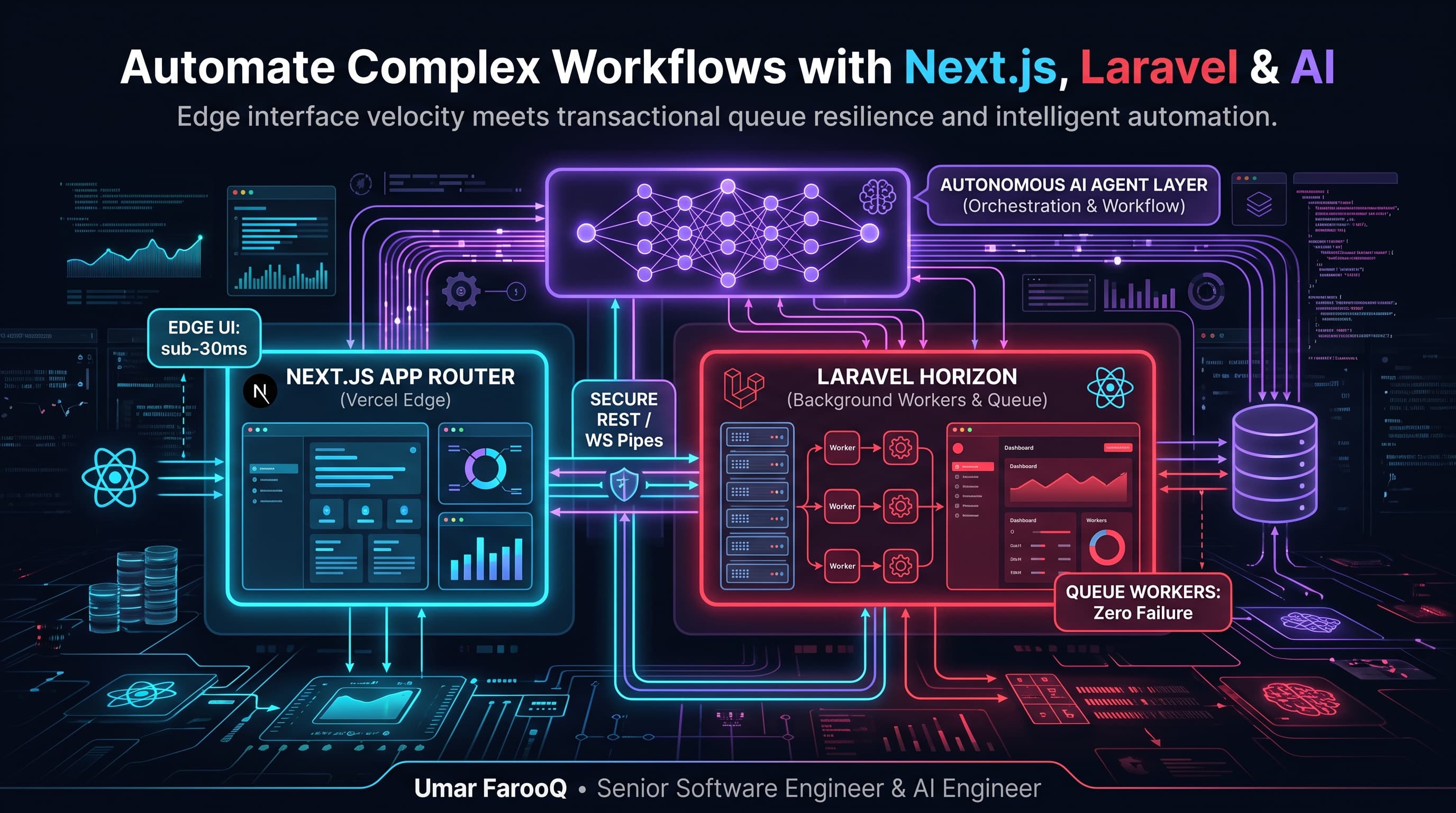
How to Automate Complex Business Workflows Using Next.js, Laravel, and AI Agents
Combine the speed of Next.js with the transactional power of Laravel and AI agents to automate complex business tasks with zero headaches.
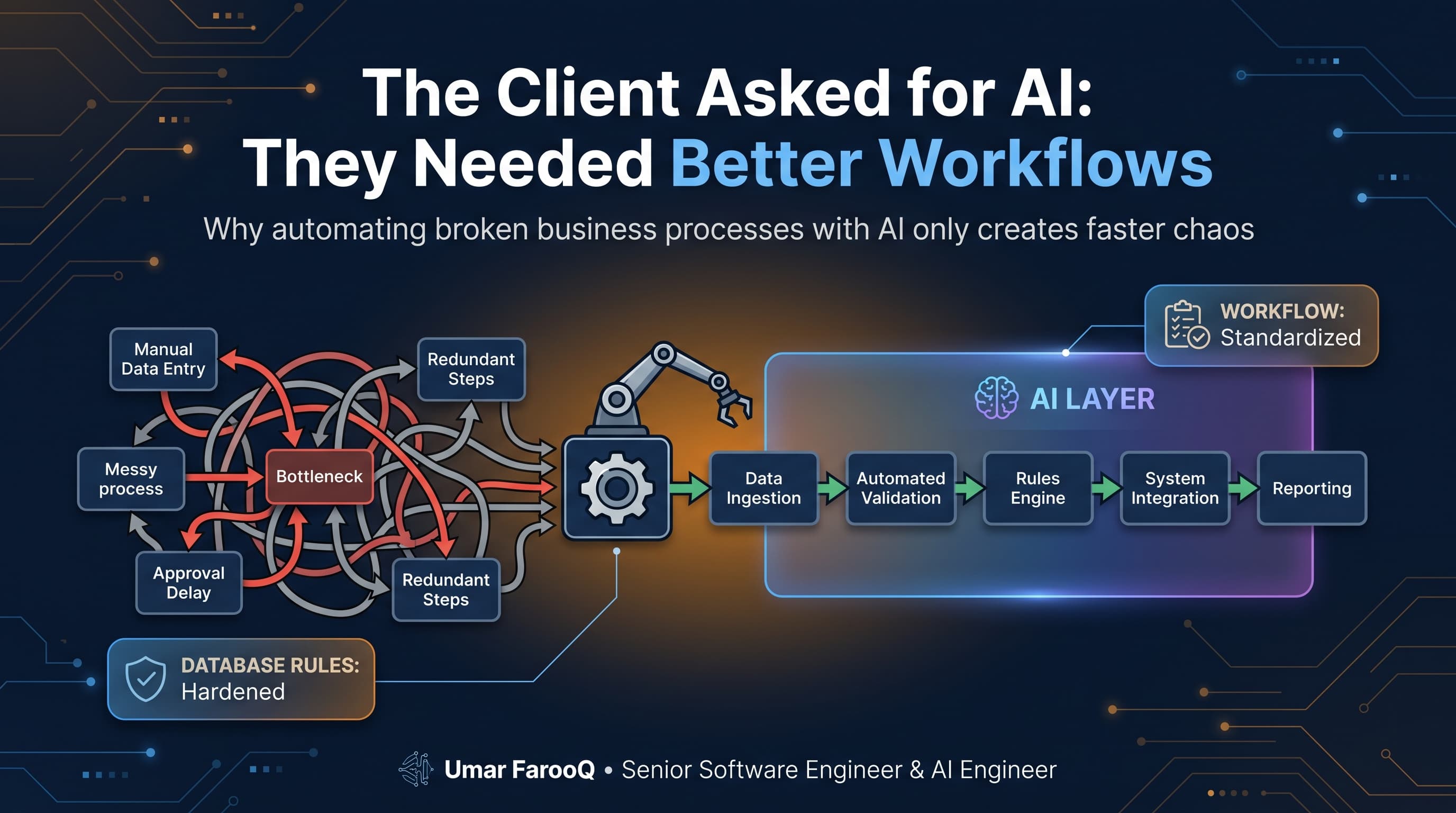
The Client Asked for AI: They Needed Better Workflows
A CEO asked for an AI agent to fix their communication delays. We analyzed their company and found 5 broken manual workflows. Why process beats buzzwords.
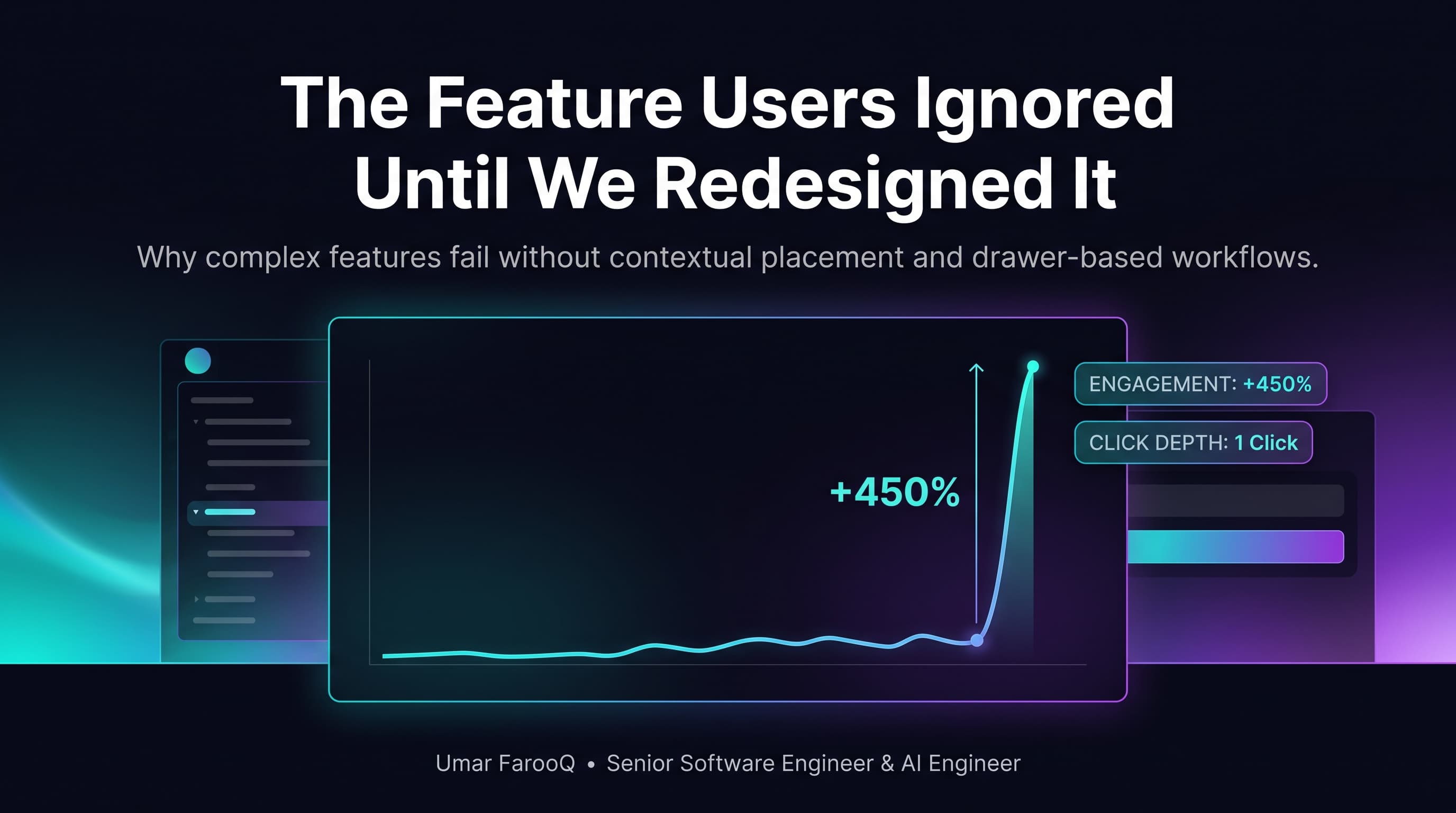
The Feature Users Ignored Until We Redesigned It
We spent months building a powerful analytics tool, but nobody clicked it. Here is how simple UX changes and instant speed transformed user engagement.