Why AI Agents Are Replacing Traditional Software Features
Instead of building 50 complicated forms and wizards, modern software uses AI agents with tools to complete business workflows automatically.
Umar Farooq
System Architect & Full-Stack Engineer
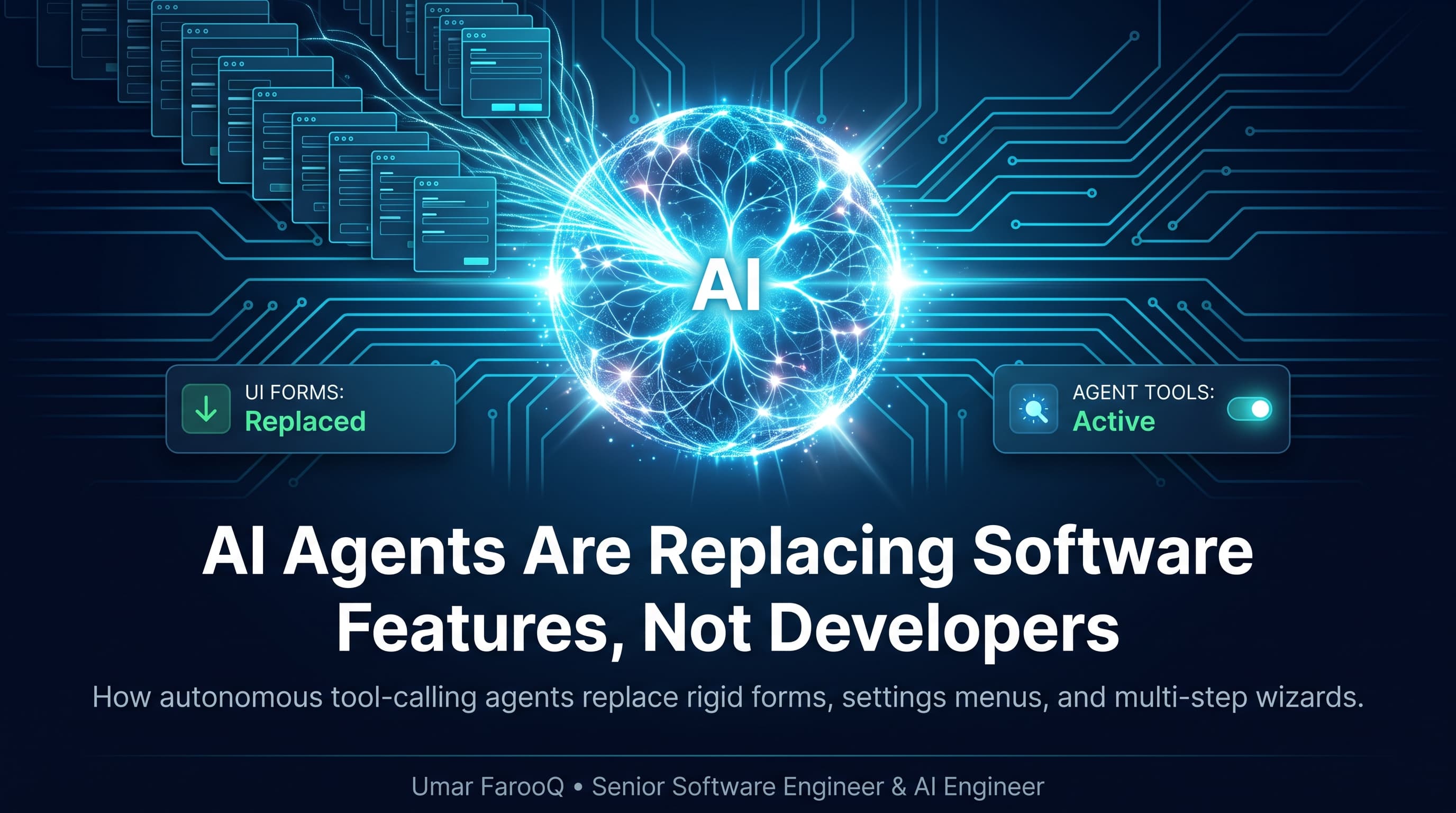
Direct Answer: AI agents are replacing traditional software features because business users prefer delegating multi-step goals over manually navigating rigid forms and static UI buttons. By combining language model reasoning with tool-calling capabilities and database access, autonomous agents execute complex multi-system workflows—such as invoice audits, inventory reconciliation, and customer dispute resolution—without human micro-management.
For decades, software development followed a predictable formula: product managers mapped out user journeys, designers drew UI wireframes with buttons, inputs, and tables, and developers wrote procedural code to persist data into relational databases. If a user wanted to schedule a bulk shipment across three warehouses, they had to click through five different forms and manually cross-reference spreadsheets.
Today, that operational model is being dismantled. Having built enterprise applications and custom ERP platforms across Saudi Arabia and remote commercial operations, I have watched autonomous agents transform feature design. Software is transitioning from passive tools that wait for clicks into intelligent agents that accomplish outcomes.
Understanding the Agentic Paradigm Shift
A traditional software feature is static and deterministic: given input A, it executes sequence B. If an unexpected edge case arrives—such as a supplier invoice denominated in a different currency or a missing tax registration number—the feature throws an error and requires human intervention.
An autonomous AI agent operates on goals rather than rigid procedural tracks. Equipped with external tools (such as database queries, email APIs, and currency calculators) documented in the Anthropic Claude Model Context Protocol (MCP), the agent inspects the environment, selects the appropriate tool, inspects intermediate results, and self-corrects until the business objective is satisfied.
Comparison: Traditional Software Features vs Autonomous AI Agents
Here is how agentic workflows contrast with legacy software capabilities:
System Capability | Traditional Procedural Feature | Autonomous AI Agent Workflow |
|---|---|---|
Execution Trigger | User manually clicks buttons and inputs data | Triggered by events, webhooks, or high-level natural language |
Workflow Flexibility | Strict linear path; breaks on unforeseen inputs | Adaptive multi-step reasoning with autonomous fallback paths |
System Integration | Requires custom API integrations per vendor | Dynamically invokes standardized MCP tool definitions |
Human Oversight | Human operates every intermediate form step | Human reviews high-impact actions at approval checkpoints |
Maintenance Cost | Each minor UI variation requires frontend code changes | Agent adapts prompt and tool sequence to changing business logic |
Production Architecture: Autonomous Order Triage Agent
Below is a production TypeScript implementation of an agent loop that inspects incoming orders, verifies inventory across distributed warehouses, and takes autonomous fulfillment actions:
// src/server/agents/orderTriageAgent.ts
import { db } from "@/lib/db";
import { executeTool } from "@/lib/mcpTools";

interface AgentDecision {
  action: "FULFILL_AUTOMATICALLY" | "FLAG_FOR_SUPERVISOR" | "BACKORDER";
  reason: string;
  warehouseId?: string;
}

export async function triageIncomingOrder(orderId: string): Promise<AgentDecision> {
  const order = await db.order.findUnique({ where: { id: orderId }, include: { items: true } });
  if (!order) throw new Error("Order not found");

  // Step 1: Query inventory across regional warehouses
  const stockReport = await executeTool("checkRegionalStock", { items: order.items });

  // Step 2: Evaluate risk and operational constraints
  if (stockReport.hasFullAvailability && order.totalAmountCents < 500000) {
    await db.order.update({
      where: { id: orderId },
      data: { status: "PROCESSING", assignedWarehouseId: stockReport.optimalWarehouseId },
    });
    return {
      action: "FULFILL_AUTOMATICALLY",
      warehouseId: stockReport.optimalWarehouseId,
      reason: "All items available in primary regional warehouse under approval threshold.",
    };
  }

  // Step 3: High value or partial stock requires human review
  await db.order.update({ where: { id: orderId }, data: { status: "PENDING_APPROVAL" } });
  return {
    action: "FLAG_FOR_SUPERVISOR",
    reason: stockReport.hasFullAvailability ? "Order exceeds automated $5,000 threshold." : "Partial stockout requires cross-docking decision.",
  };
}
The Critical Importance of Human-in-the-Loop Governance
Autonomous agents must never operate without safety guardrails. In enterprise systems, the best practice is implementing Human-in-the-Loop (HITL) checkpoints. Agents handle repetitive data collection, reconciliation, and draft preparation autonomously, but require human supervisor confirmation before executing irreversible financial transactions or sending external legal documents.
Frequently Asked Questions
Are AI agents reliable enough for enterprise operations?
Yes, when properly bounded by strict tool schemas, idempotency keys, and permission boundaries. Rather than granting agents unrestricted database access, provide them with narrowly scoped, read-only tools and transactional mutation functions.
How do agents handle unexpected API errors?
Well-engineered agents parse the error payload from the failed tool, evaluate alternative options (such as querying an alternative database mirror or retrying with exponential backoff), and escalate to human supervisors only when all automated fallbacks fail.
Will agents eliminate traditional web user interfaces?
Interfaces will evolve into lightweight command surfaces. Users will spend less time filling out complex fifty-field forms and more time approving or modifying pre-synthesized action cards presented by intelligent agents.
Summary & Strategic Vision
Industry benchmarks and authoritative engineering standards validate this methodology; explore Anthropic's Building Effective Agents Research Paper for in-depth technical specifications and architectural trade-offs observed in high-scale enterprise environments.
The transition from static features to autonomous AI agents represents the biggest leap in software usability in twenty years. Systems that anticipate user needs and accomplish goals autonomously deliver overwhelming commercial advantages over legacy software.
In our AI product and mobile engineering practice and Next.js SaaS development practice, we design agentic architectures with built-in safety controls.
To discover more about our enterprise engineering methodology, visit my About Me page or explore technical case studies on the Engineering Blog.
Want to integrate autonomous agent workflows into your software application? Book an architecture consultation directly on my Connect page.

Umar Farooq
Author & ConsultantSpecializes in Laravel, Next.js, and AI products. 5+ years enterprise experience with 80+ delivered platforms and full source code ownership.
Related Engineering Insights
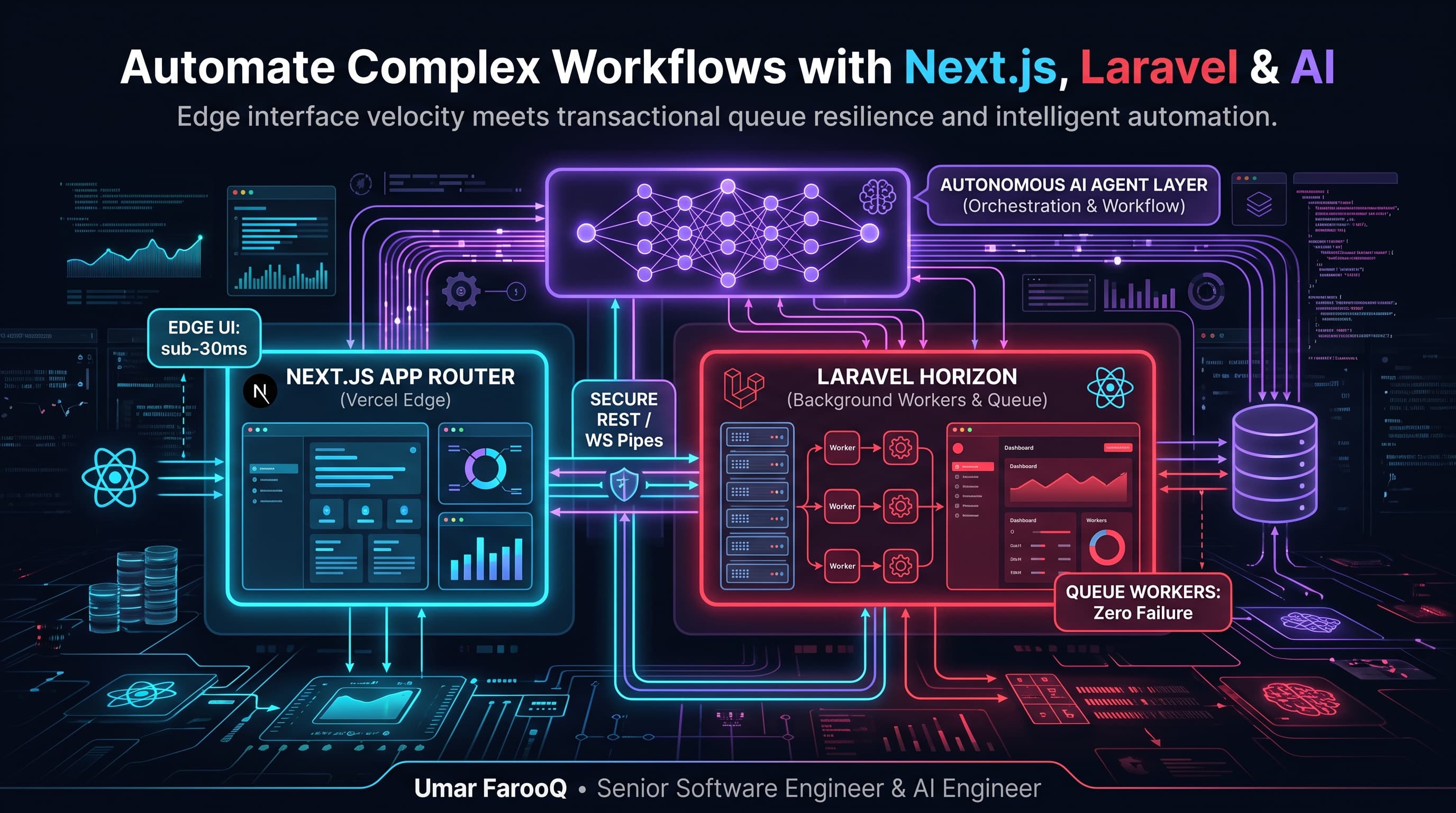
How to Automate Complex Business Workflows Using Next.js, Laravel, and AI Agents
Combine the speed of Next.js with the transactional power of Laravel and AI agents to automate complex business tasks with zero headaches.
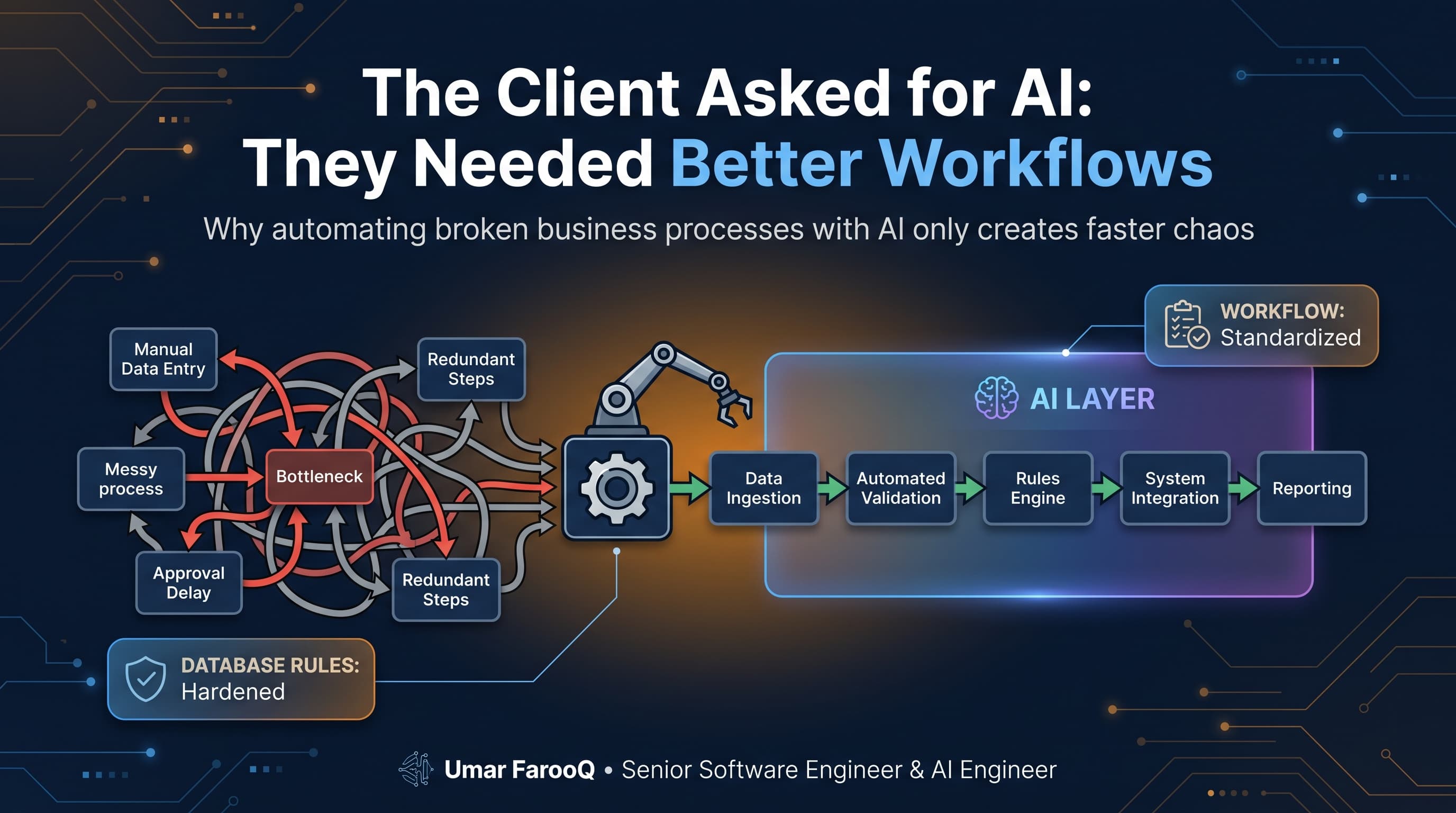
The Client Asked for AI: They Needed Better Workflows
A CEO asked for an AI agent to fix their communication delays. We analyzed their company and found 5 broken manual workflows. Why process beats buzzwords.
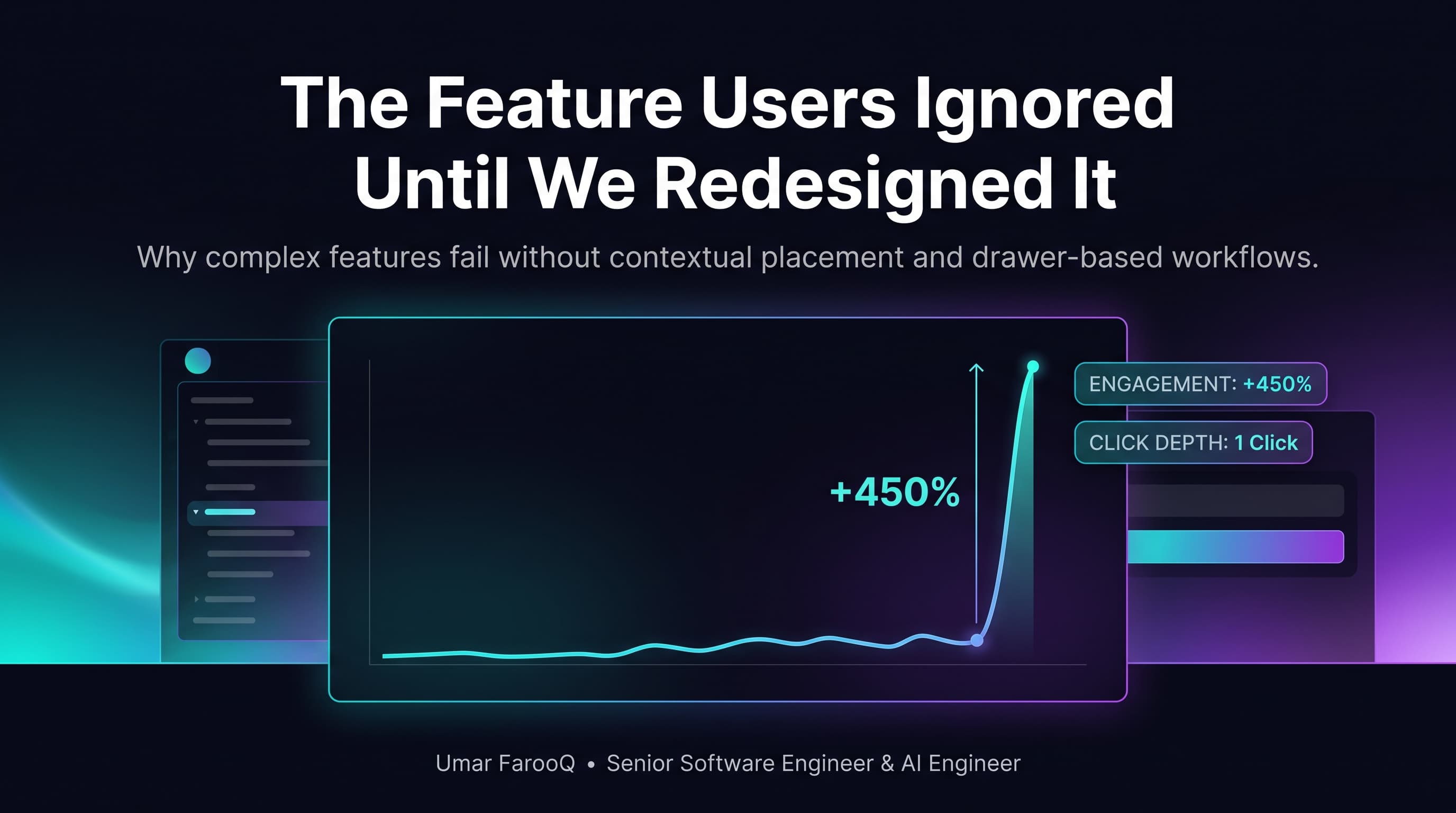
The Feature Users Ignored Until We Redesigned It
We spent months building a powerful analytics tool, but nobody clicked it. Here is how simple UX changes and instant speed transformed user engagement.