Why Quality Software Engineering Is Cheaper Long Term
A client rejected our proposal to choose a cheap freelancer. Six months later, the app crashed on launch and cost 3x more to rebuild. Why quality is cheaper.
Umar Farooq
System Architect & Full-Stack Engineer
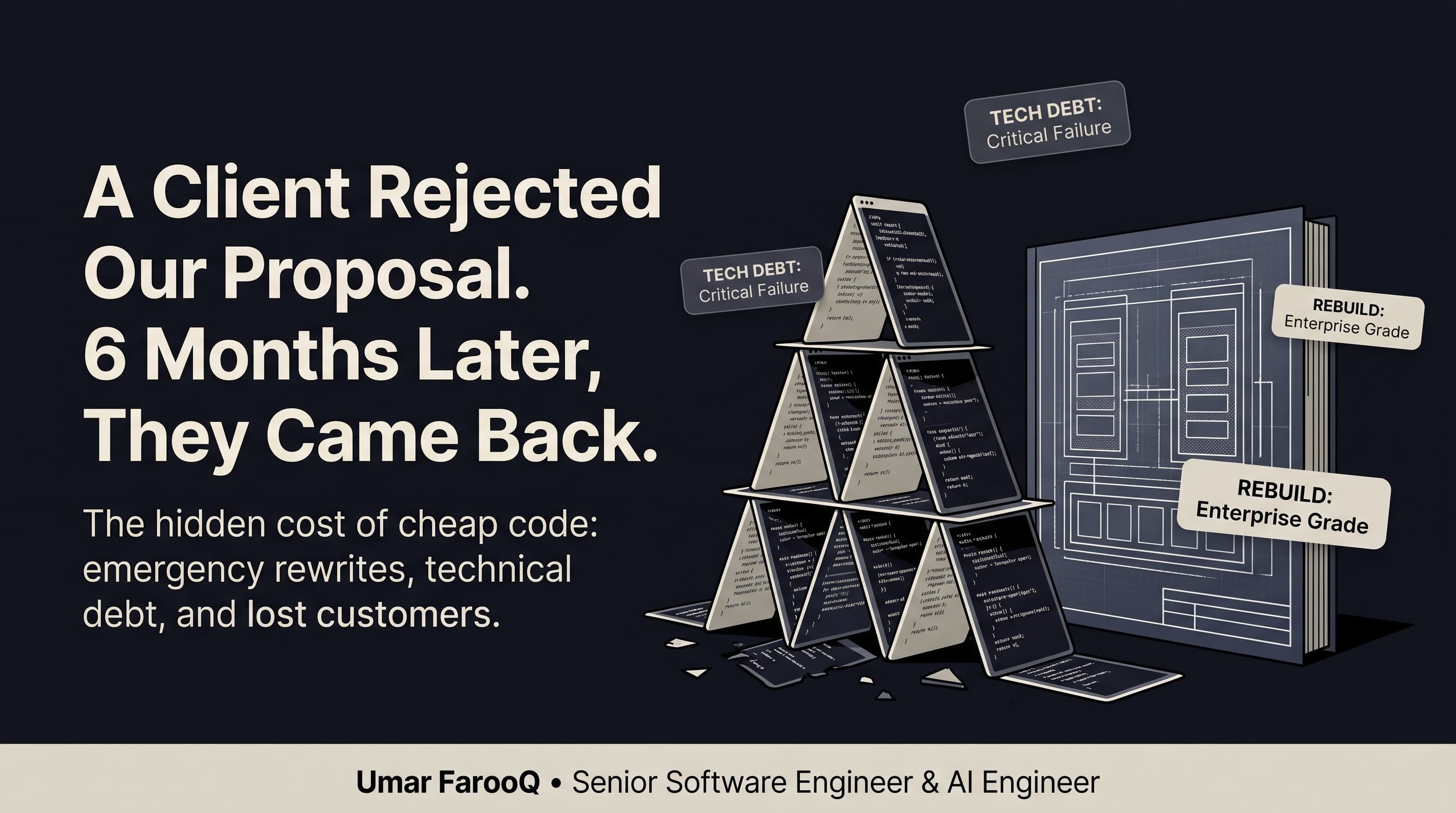
Direct Answer: Quality software engineering is cheaper long term because clean code, modular architecture, and automated testing eliminate technical debt interest. While cheap, rushed development appears economical upfront, the compounding costs of production downtime, emergency bug triage, slow feature delivery, and inevitable total rebuilds ultimately cost five to ten times more than doing it right from day one.
When founders or corporate executives embark on a new software initiative, engineering proposals often vary wildly. One vendor promises to deliver a full-featured MVP in three weeks for $3,000 using pre-made templates and rushed scripts. A seasoned senior engineer proposes a six-week engagement for $15,000 with modular architecture, strict type safety, and automated test coverage.
To a non-technical decision-maker, the cheaper option feels like a bargain. Over five years consulting for enterprise platforms and startups across Saudi Arabia and remote markets, I have witnessed the aftermath of this decision dozens of times. The cheap code works just long enough to collect an invoice—and then begins extracting a devastating financial toll.
The Compounding Mathematics of Technical Debt
Technical debt is not a theoretical abstraction; it behaves exactly like high-interest financial debt. Rushing out code without database indexes, input validation, or automated tests borrows time against your future velocity. As new features are added on top of a fragile foundation, every subsequent pull request takes longer to write and breaks three unrelated modules.
As highlighted in software economics research by Martin Fowler on the Design Stamina Hypothesis, low-quality software slows delivery speed within weeks. High-quality architecture crosses the economic payoff line remarkably quickly, after which clean code ships features significantly faster than rushed alternatives.
Financial Comparison: Cheap Rushed Code vs Quality Engineering
Here is a realistic twelve-month financial comparison between low-cost development and quality engineering for a commercial SaaS application:
Expenditure Category | Budget Low-Cost Path (12 Months) | Quality Engineering Path (12 Months) |
|---|---|---|
Initial MVP Build Cost | $4,000 (Rushed in 3 weeks) | $14,000 (Built with clean architecture) |
Monthly Server & Bug Fixes | $1,800 / month ($21,600 total triage) | $200 / month ($2,400 routine maintenance) |
Customer Churn from Outages | $18,000 in lost subscription revenue | < $1,500 minimal customer attrition |
Emergency Rebuild at Month 8 | $22,000 complete ground-up rewrite | $0 (Modular architecture scales seamlessly) |
Total Year 1 Financial Impact | $65,600 in total capital consumed | $17,900 in total capital consumed |
The True Cost of Code Ownership and Scalability
When you hire senior software craftsmanship, you are not paying for lines of code. You are investing in risk reduction. A senior engineer ensures that database migrations are reversible, sensitive environment keys are secured, payment webhooks are idempotent, and critical user journeys are guarded by automated regression tests.
Production Quality Standard: Automated Verification Pipeline
Quality is enforced through automated gates. Below is a production GitHub Actions CI workflow script guaranteeing that no pull request can be merged into production without passing linting, strict type checks, and automated unit test assertions:
# .github/workflows/quality-gate.yml
name: Production Quality Gate

on:
  pull_request:
    branches: [main]

jobs:
  verify:
    runs-on: ubuntu-latest
    steps:
      - name: Checkout Code
        uses: actions/checkout@v4

      - name: Setup Node.js & Dependencies
        uses: actions/setup-node@v4
        with:
          node-version: 20
          cache: "npm"

      - run: npm ci

      - name: Verify Strict TypeScript Types
        run: npm run type-check

      - name: Verify Code Style & Linting
        run: npm run lint

      - name: Execute Automated Regression Tests
        run: npm run test:unit
The Founder's Checklist for Evaluating Engineering Proposals
When comparing software engineering proposals, look beyond hourly rates and delivery dates. Inquire about database indexing strategies, automated unit test coverage, environment secret management, and disaster recovery procedures. A slightly higher initial investment in experienced engineering saves tens of thousands of dollars in emergency fixes.
Frequently Asked Questions
Can an early-stage startup afford quality engineering?
Early-stage startups cannot afford bad engineering. A startup operating on a limited funding runway that wastes three months and $30,000 rebuilding a broken MVP frequently runs out of cash before achieving product-market fit. Quality engineering keeps burn rates low and predictable.
Does clean code mean building an over-engineered system?
No. Quality engineering is the opposite of over-engineering. A senior engineer builds the simplest possible architecture that solves the immediate business problem while maintaining clean boundaries so future features can be added without friction.
How can non-technical founders evaluate engineering quality?
Look for automated test suites, clear git commit messages, modular directory structures, and comprehensive documentation. If a developer cannot explain their architectural trade-offs or resists adding automated tests, they are generating technical debt.
Summary & Strategic Advice
Industry benchmarks and authoritative engineering standards validate this methodology; explore Martin Fowler on Technical Debt Quadrant for in-depth technical specifications and architectural trade-offs observed in high-scale enterprise environments.
Software is the operational foundation of modern business. Cutting corners on engineering quality is a costly illusion. Investing in experienced craftsmanship delivers lower maintenance bills, happier customers, and effortless commercial scale.
In our Next.js SaaS development practice and enterprise Laravel backend services, we build software designed to stand the test of time.
To discover more about our engineering standards and track record, explore my About Me profile or read through our case studies on the Engineering Blog.
Ready to build software the right way or rescue a compromised legacy application? Book an architectural consultation on my Connect page.

Umar Farooq
Author & ConsultantSpecializes in Laravel, Next.js, and AI products. 5+ years enterprise experience with 80+ delivered platforms and full source code ownership.
Related Engineering Insights
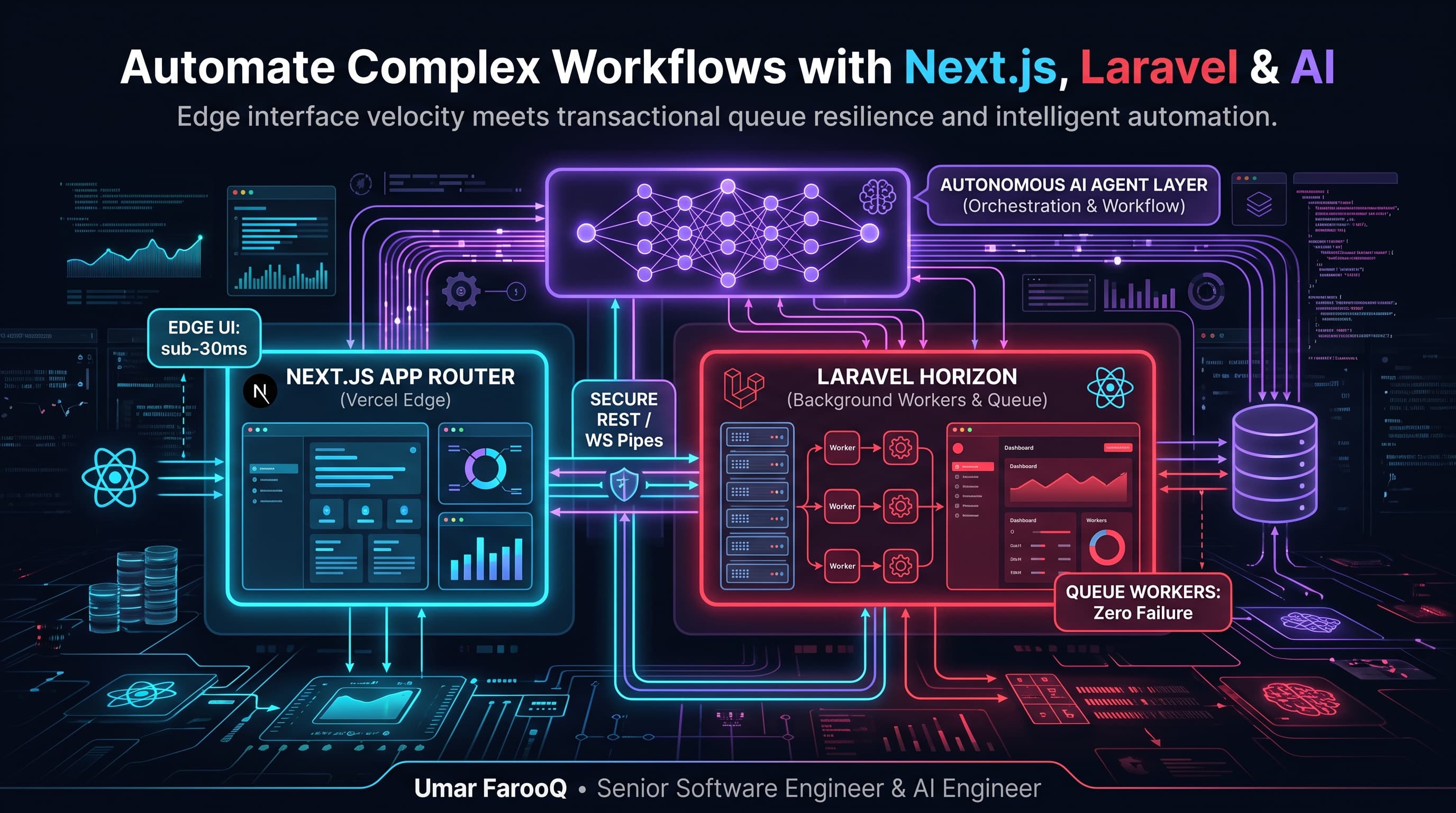
How to Automate Complex Business Workflows Using Next.js, Laravel, and AI Agents
Combine the speed of Next.js with the transactional power of Laravel and AI agents to automate complex business tasks with zero headaches.
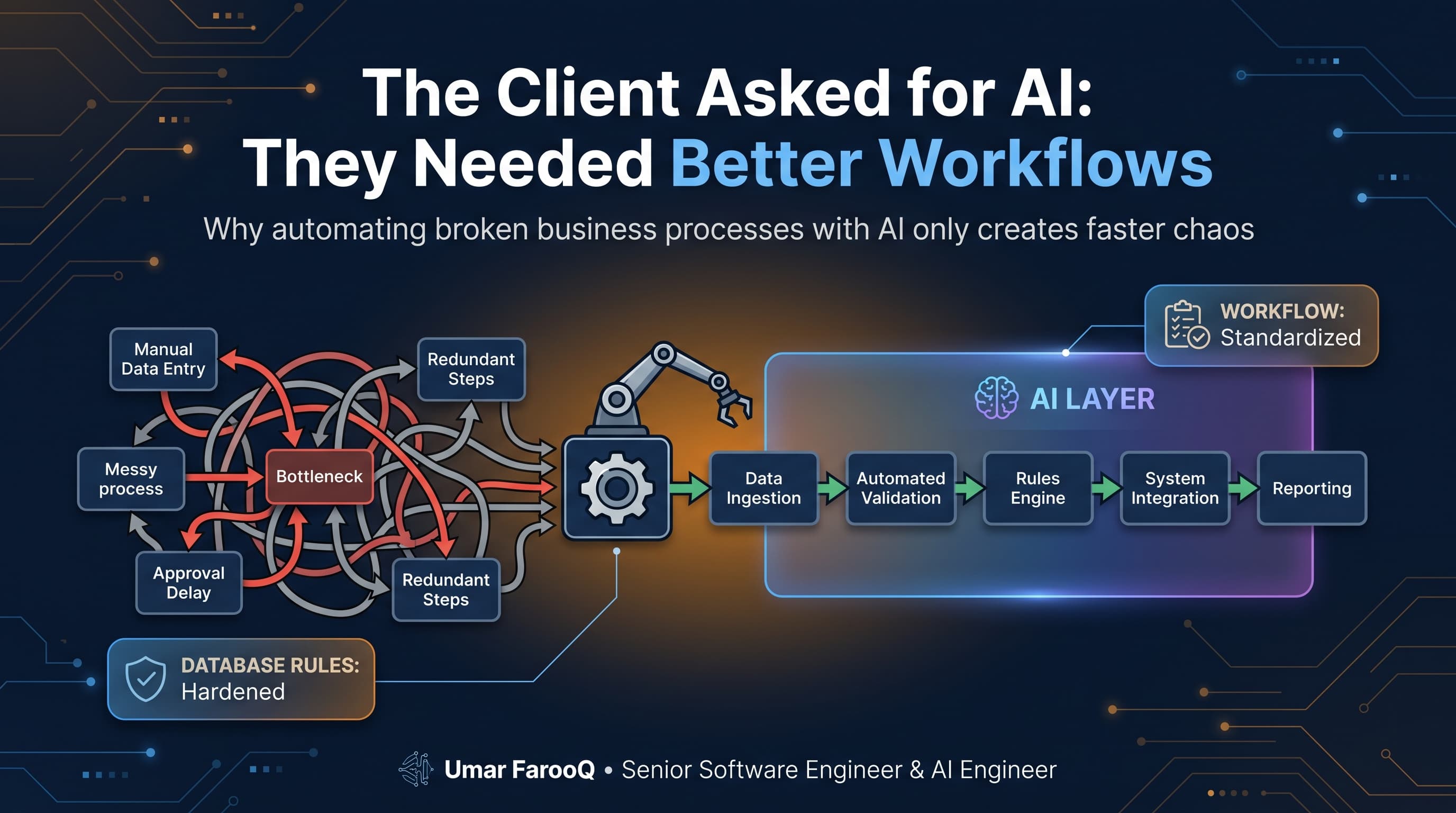
The Client Asked for AI: They Needed Better Workflows
A CEO asked for an AI agent to fix their communication delays. We analyzed their company and found 5 broken manual workflows. Why process beats buzzwords.
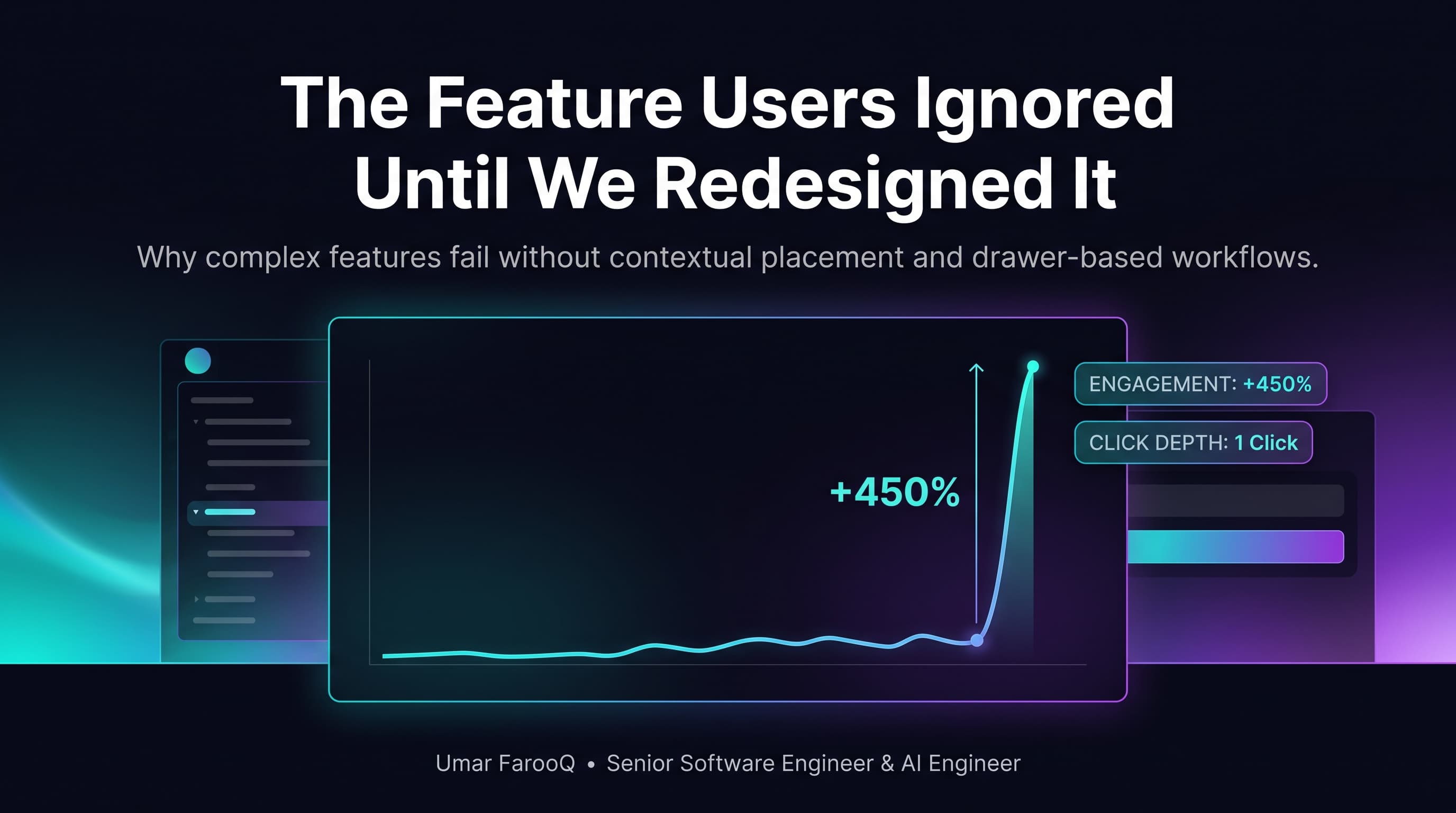
The Feature Users Ignored Until We Redesigned It
We spent months building a powerful analytics tool, but nobody clicked it. Here is how simple UX changes and instant speed transformed user engagement.