Why Software Developers Should Attend Client Meetings
Coding in a dark room without talking to real users leads to wasted time. Here is why attending client meetings makes you a much better software engineer.
Umar Farooq
System Architect & Full-Stack Engineer
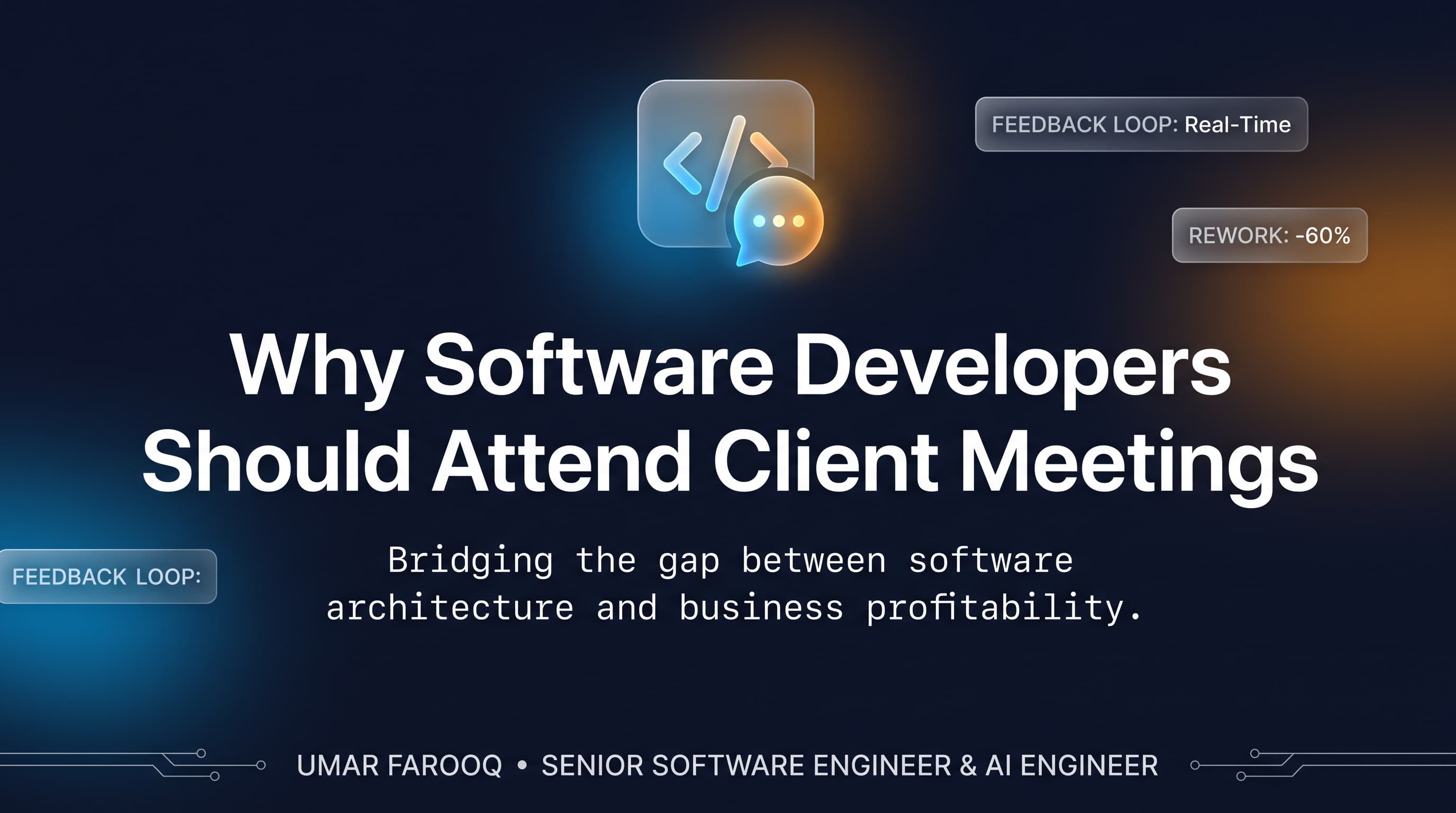
When developers attend client meetings, domain misunderstandings vanish before sprint planning.
Direct Answer: Software developers should attend client meetings because direct exposure to end-user pain points eliminates costly requirement translation errors. When engineers participate directly in discovery and feedback conversations, they identify technical edge cases early, propose simpler software architectures, and build features that solve real business problems rather than implementing rigid, misinterpreted specifications.
In traditional software agencies and enterprise IT departments, developers are often shielded from clients. Product managers, account executives, and business analysts sit between engineering and the stakeholders who actually use the software. While intended to maximize uninterrupted coding time, this isolation frequently results in costly miscommunication and discarded features.
Throughout my career architecting custom ERP systems and SaaS applications for enterprise clients across Riyadh and global teams, I have seen direct stakeholder collaboration transform software outcomes. When developers observe how a warehouse manager or finance clerk interacts with a system, the architectural priorities become instantly apparent.
The Hidden Cost of Feature Translation Layers
When business requirements travel through multiple intermediaries—from client to sales, to product manager, to engineering lead, and finally to developers—nuance is inevitably lost. A client asking for a faster way to review weekly purchase orders might receive a complex multi-tab reporting suite when all they actually needed was a bulk-approval keyboard shortcut.
According to agile delivery research documented in the Agile Manifesto Principles, business people and developers must work together daily throughout the project. Direct developer participation eliminates the telephone game, saving weeks of refactoring.
Comparison: Filtered Communication vs Direct Developer Interaction
Here is how project trajectories differ based on developer involvement:
Project Dimension | Filtered Communication (Developer Isolated) | Direct Developer Collaboration |
|---|---|---|
Requirement Accuracy | Assumptions lead to misaligned features | Questions answered in real time with technical context |
Edge Case Detection | Discovered late during production QA testing | Identified immediately during initial scoping discussions |
Architecture Efficiency | Over-engineered solutions based on speculative briefs | Lean, targeted solutions solving the exact operational pain |
Delivery Velocity | Multi-week feedback cycles through ticket queues | Rapid iteration with immediate validation and deployment |
Engineer Engagement | Transactional ticket execution with low ownership | High domain empathy and pride in delivered business value |
Practical Implementation: A Technical Discovery Workflow
When developers attend meetings, they should not behave as passive observers. Here is a battle-tested technical discovery framework that engineers can follow to uncover operational realities:
// Engineering Discovery Protocol: Evaluating Feature Feasibility
interface DiscoveryQuestion {
  businessGoal: string;
  currentWorkaround: string;
  dataVolume: number;
  frequencyOfUse: "daily" | "weekly" | "monthly";
}

export function evaluateFeatureScope(item: DiscoveryQuestion) {
  // If the task occurs daily with high volume, optimize for speed & keyboard flow
  if (item.frequencyOfUse === "daily" && item.dataVolume > 100) {
    return {
      architecture: "In-memory optimistic UI with keyboard shortcuts",
      latencyTargetMs: 50,
      avoidComplexModals: true,
    };
  }

  // Standard CRUD workflow for low-frequency administrative tasks
  return {
    architecture: "Standard Server-Rendered Component with Form Actions",
    latencyTargetMs: 250,
    avoidComplexModals: false,
  };
}
Translating Business Terminology into Database Invariants
The most profound benefit of attending client meetings is mapping informal business vernacular into strict database invariants. When an operations manager says 'orders cannot sit in pending status over the weekend', a junior developer might think of a cron job, whereas a senior engineer designs a database state machine with transactional transitions and automated fallback escalation.
Balancing Focus Time with Client Engagement
Developers understandably guard their deep focus time. Attending every administrative status check is counterproductive. However, participating in key milestone conversations—such as initial architecture discovery, bi-weekly sprint demos, and post-launch reviews—delivers immense leverage. Two hours spent listening to a customer saves fifty hours of writing code that misses the mark.
Frequently Asked Questions
Won't client meetings distract engineers from coding?
Not when structured purposefully. Engineers should attend targeted technical discovery sessions and milestone demos, not administrative status meetings. Spending two hours clarifying edge cases directly with stakeholders prevents dozens of hours wasted reworking incorrectly implemented features.
What should a developer say during a client call?
Focus on active listening and technical clarification. Ask clients to walk through their daily workflows, identify repetitive manual data entry, and explain why current systems feel slow. Avoid technical jargon; translate engineering constraints into clear business trade-offs.
How does client exposure help career growth?
Direct client exposure develops commercial awareness, stakeholder management, and product thinking. The most valuable senior engineers are not those who type the fastest, but those who understand business domains deeply and design systems that drive measurable commercial value.
Summary & Professional Recommendation
Industry benchmarks and authoritative engineering standards validate this methodology; explore Martin Fowler's essays on continuous design for in-depth technical specifications and architectural trade-offs observed in high-scale enterprise environments.
Great software engineering is not merely about writing syntactically elegant code; it is about solving genuine human and business problems. By participating in client conversations, developers gain the domain empathy required to build software that users genuinely love.
In our full-stack Laravel development practice and custom Next.js engineering engagements, direct technical communication is standard practice across every client project.
To discover more about our collaborative engineering philosophy, read through my About Me page or explore case studies on the Engineering Blog.
Looking for a senior technical partner who understands both business operations and full-stack code? Schedule a discussion through my Connect page.

Umar Farooq
Author & ConsultantSpecializes in Laravel, Next.js, and AI products. 5+ years enterprise experience with 80+ delivered platforms and full source code ownership.
Related Engineering Insights
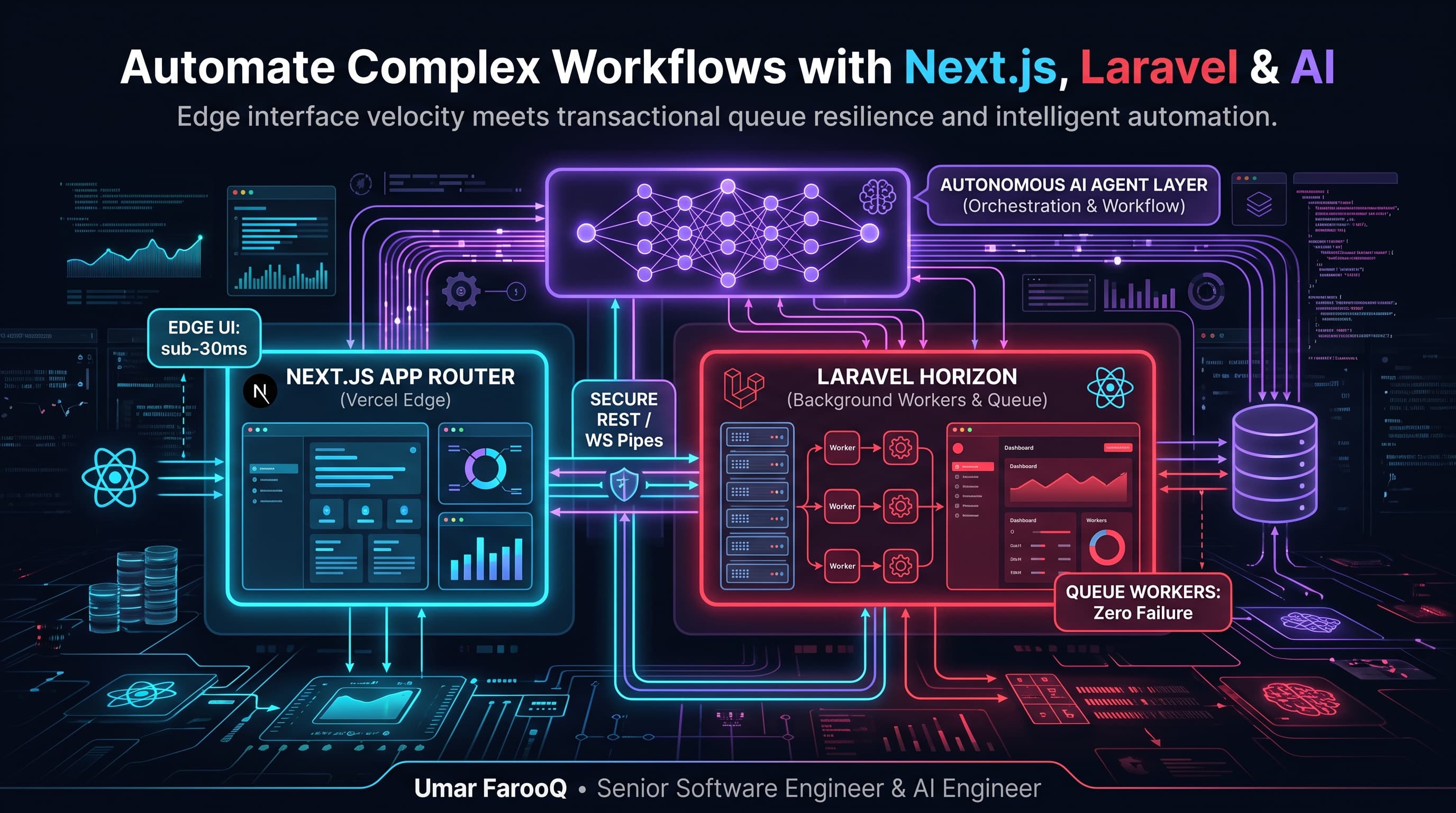
How to Automate Complex Business Workflows Using Next.js, Laravel, and AI Agents
Combine the speed of Next.js with the transactional power of Laravel and AI agents to automate complex business tasks with zero headaches.
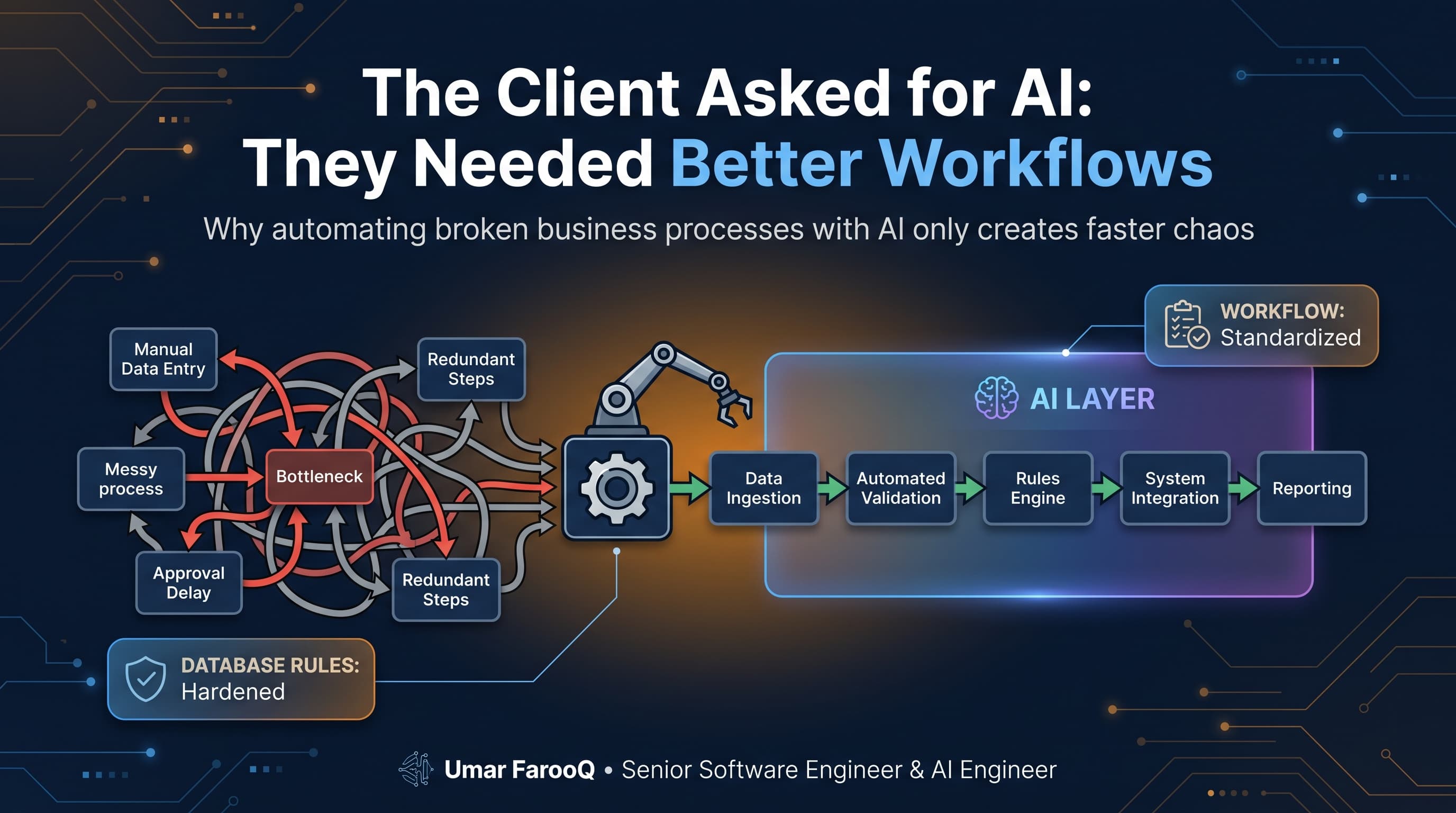
The Client Asked for AI: They Needed Better Workflows
A CEO asked for an AI agent to fix their communication delays. We analyzed their company and found 5 broken manual workflows. Why process beats buzzwords.
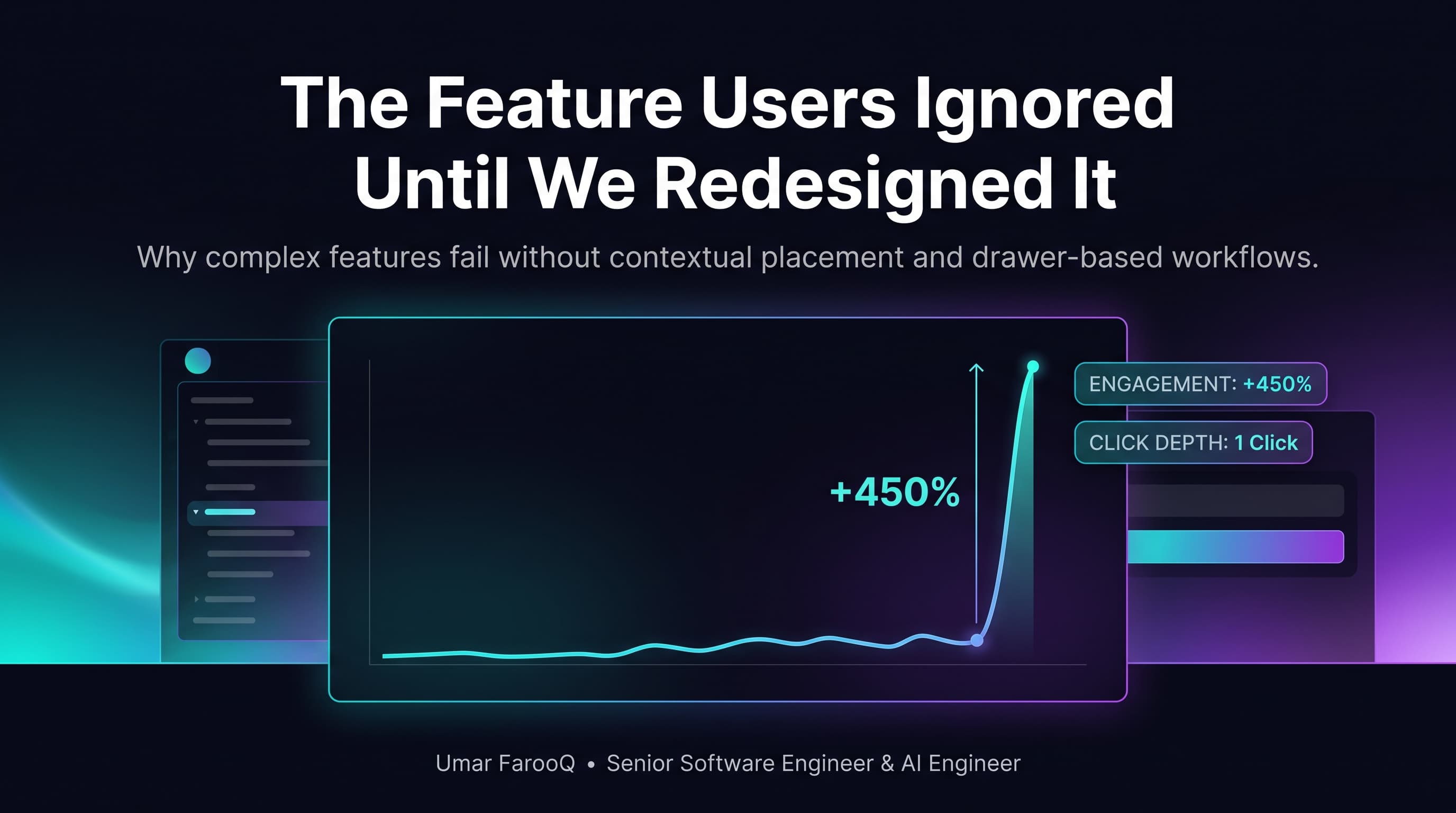
The Feature Users Ignored Until We Redesigned It
We spent months building a powerful analytics tool, but nobody clicked it. Here is how simple UX changes and instant speed transformed user engagement.