How I Use AI During Software Development
AI can accelerate repetitive coding tasks, but blind trust causes production outages. Here is how I integrate AI into my daily engineering workflow while maintaining strict code ownership.
Umar Farooq
System Architect & Full-Stack Engineer
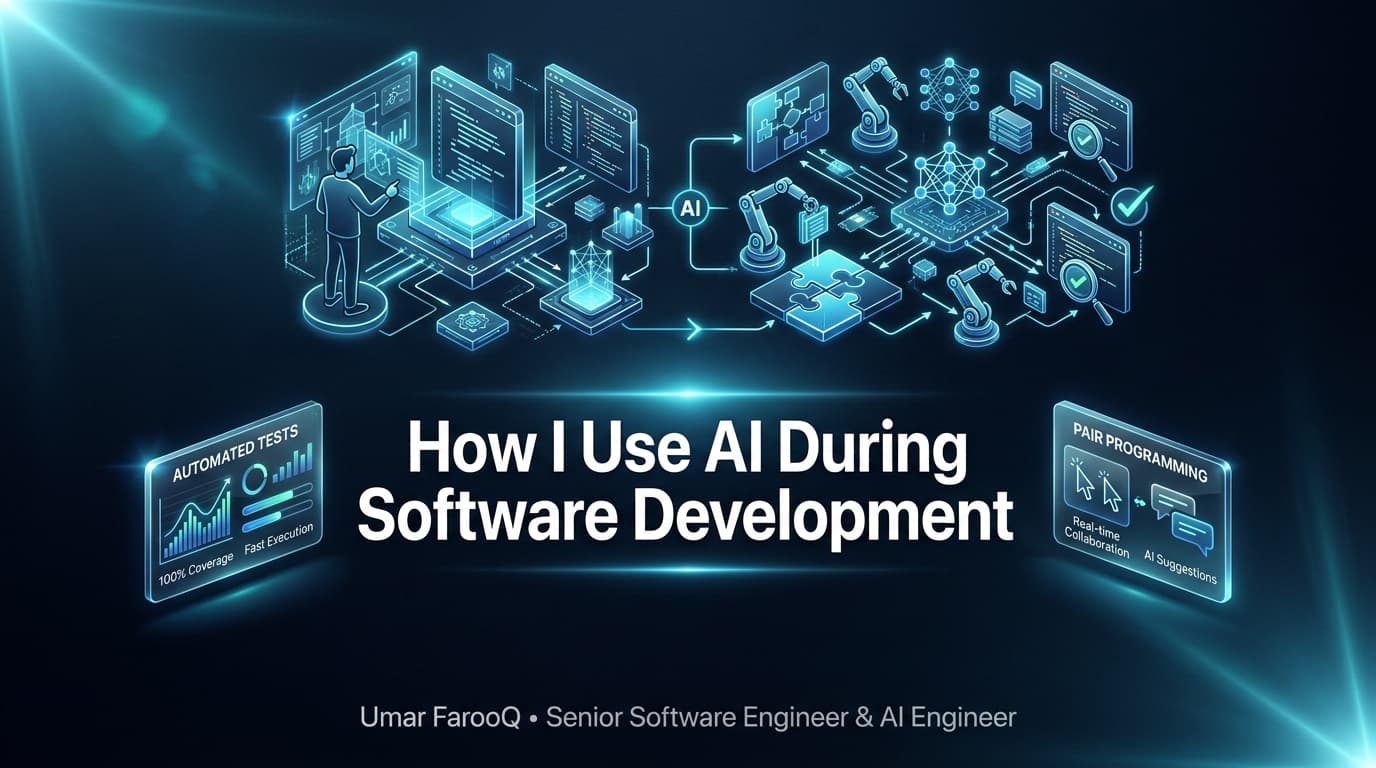
Over the past two years, software engineering conversations have become polarized. On one extreme, advocates of unchecked "vibe coding" claim that human developers no longer need to understand syntax or system design. On the other extreme, skeptics dismiss modern generative tools as nothing more than autocomplete toys that introduce dangerous security vulnerabilities.
The truth for professional engineers is far more practical. When building production software for companies like MSN Leathers and enterprise clients across Saudi Arabia and Europe, AI is neither a replacement for engineering judgment nor a useless gimmick. It is an extraordinary productivity accelerant—provided you maintain strict ownership over the code you deploy.
AI can help me write code five times faster. But I still need to understand, test, review, and own the code. If a transaction locks the database at midnight, the language model does not receive the on-call alert. I do.
Where AI Delivers High Engineering Return on Investment
I treat AI as a tireless junior developer capable of executing well-specified tasks at extreme speed. The key is knowing which tasks to delegate and which to keep entirely in human hands.
1. Test Suite Scaffolding and Edge-Case Discovery
Writing comprehensive unit and integration tests is critical for long-term software maintainability, but creating test fixtures and mock data is repetitive. AI excels at analyzing a domain model and generating boundary conditions that developers often overlook.
Using tools like Cursor and structured prompt workflows, I provide an existing service class and ask for test suites following official standards from the Pest PHP Framework Documentation to cover null pointers, zero-quantity orders, and database constraint exceptions.
Production Example: Generating Automated Pest Test Scaffolding
Here is an example of an automated Pest PHP test suite scaffolded with AI assistance to verify inventory deduction logic:
// tests/Feature/InventoryDeductionTest.php
use App\Models\Product;
use App\Models\Warehouse;
use App\Services\InventoryService;
use App\Exceptions\InsufficientStockException;

beforeEach(function () {
    $this->service = app(InventoryService::class);
    $this->warehouse = Warehouse::factory()->create();
    $this->product = Product::factory()->create();
});

it('deducts inventory correctly inside an atomic database lock', function () {
    $this->product->stocks()->create([
        'warehouse_id' => $this->warehouse->id,
        'quantity' => 50,
    ]);

    $this->service->deductStock($this->product->id, $this->warehouse->id, 15);

    expect($this->product->freshStock($this->warehouse->id))->toBe(35);
});

it('throws an InsufficientStockException and rolls back when order exceeds inventory', function () {
    $this->product->stocks()->create([
        'warehouse_id' => $this->warehouse->id,
        'quantity' => 10,
    ]);

    expect(fn () => $this->service->deductStock($this->product->id, $this->warehouse->id, 25))
        ->toThrow(InsufficientStockException::class);

    // Verify atomic state remained unchanged
    expect($this->product->freshStock($this->warehouse->id))->toBe(10);
});
2. Refactoring Legacy Code and Explaining Unfamiliar Logic
When taking over legacy PHP systems or inherited multi-tenant codebases, developers encounter undocumented 400-line functions with nested conditional logic. Pasting those functions into an isolated context and asking for a line-by-line breakdown of data transformations saves hours of manual debugging.
The Strict "No-AI-Trust" Zones
Just as important as knowing where to use AI is enforcing absolute boundaries where generated code is never deployed without rigorous manual verification. In my development workflow, the following areas are non-negotiable:
Authentication and Session Guards: AI models frequently generate outdated security patterns, insecure cookie defaults, or flawed role-based access checks that expose sensitive endpoints.
Database Locks and Atomic Transactions: Models often omit database row locks (such as SELECT FOR UPDATE) during inventory or balance operations, creating disastrous race conditions under concurrent traffic.
Financial Calculations and Ledger Integrity: Floating-point mathematics in billing logic can produce rounding discrepancies. Financial calculations must always use strict integer-based cents or BCMath functions.
Vibe Coding vs Senior Engineering Workflow
Here is how haphazard AI usage differs from structured, senior-level implementation:
Engineering Dimension | Unchecked 'Vibe Coding' | Senior AI-Assisted Engineering |
|---|---|---|
Code Review | Blind acceptance of generated code | Line-by-line syntax, memory, and security review |
Architecture Ownership | Model dictates database schema | Human defines strict database ERD and API contracts |
Test Verification | Tests omitted to save time | Automated CI/CD pipelines verifying edge cases |
Security Posture | Vulnerable to leaked tokens & injections | Strict input validation with Zod and sanitized queries |
Production Result | Fragile systems that break under load | High-performance, maintainable enterprise platforms |
My Daily Development Toolkit
My development workflow blends modern tools with foundational software craftsmanship:
Code Generation & Refactoring: Cursor and Claude Code for contextual workspace querying and boilerplate scaffolding.
Version Control & Automation: Git with structured branch strategies and automated pipelines configured according to GitHub Actions Documentation to enforce linting and test coverage before merging.
Database & Performance Profiling: TablePlus and native query analyzers to verify that generated queries do not introduce N+1 query bottlenecks.
Final Perspective for Software Engineers
Frequently Asked Questions
Does AI replace senior software engineers?
No. AI tools generate code based on patterns, but cannot reason about system architecture, trade-offs, security attack vectors, or business domain subtleties. Senior engineers use AI as a high-speed typist to accelerate boilerplate while applying rigorous architectural review and testing to every pull request.
How do you prevent AI bugs in production?
Never commit AI-generated code without comprehensive automated tests. Senior developers write test assertions first using Pest or Jest, verify edge cases and boundary conditions, and use automated GitHub Actions CI pipelines to ensure that generated functions pass strict linting and type checking.
What is the best way to prompt coding tools?
Provide precise constraints rather than broad instructions. Specify the input and output types, acceptable dependencies, error handling behavior, and test requirements. Scoping context to only the relevant two or three files produces dramatically higher quality code than dumping an entire codebase into an assistant.
Artificial intelligence will not replace software engineers who understand system design, business requirements, and operational reliability. It will, however, replace engineers who refuse to adapt to modern tooling.
By adopting AI as an accelerant while maintaining full personal accountability for your architecture, you can deliver robust, production-grade applications in a fraction of the time. When we execute client projects in our Laravel full-stack engineering services, this disciplined approach guarantees speed without compromising code quality.
To read more about my engineering philosophy and lessons learned from five years of software development, visit my About Me page or explore our full suite of technical case studies on the Engineering Blog.
Looking for a seasoned full-stack engineer who combines modern AI productivity with uncompromising production discipline? Let's connect directly on my Connect Hub.

Umar Farooq
Author & ConsultantSpecializes in Laravel, Next.js, and AI products. 5+ years enterprise experience with 80+ delivered platforms and full source code ownership.
Related Engineering Insights
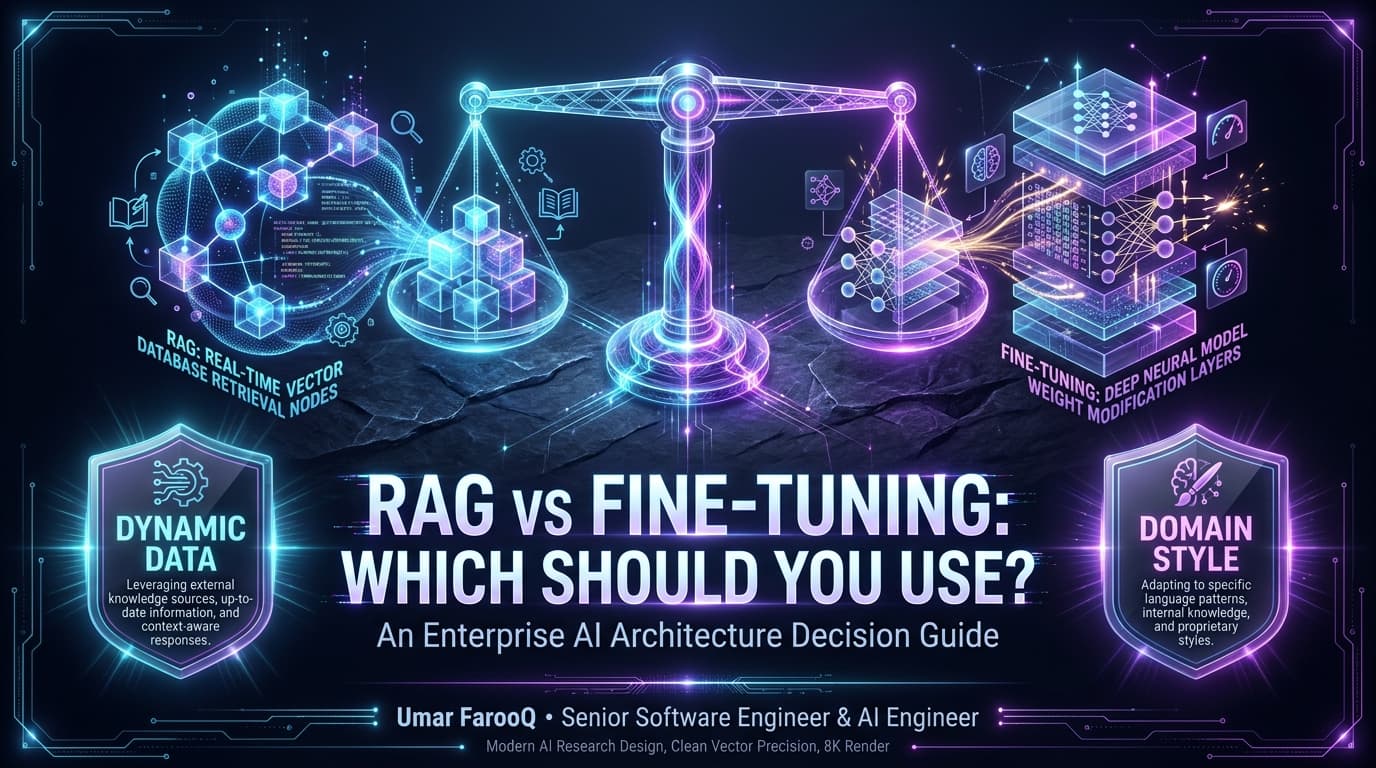
RAG vs Fine-Tuning: Which Should You Use?
Should you fine-tune an open-source LLM or build a vector RAG pipeline? Here is a practical engineering guide to cost, hallucination control, and real business requirements.
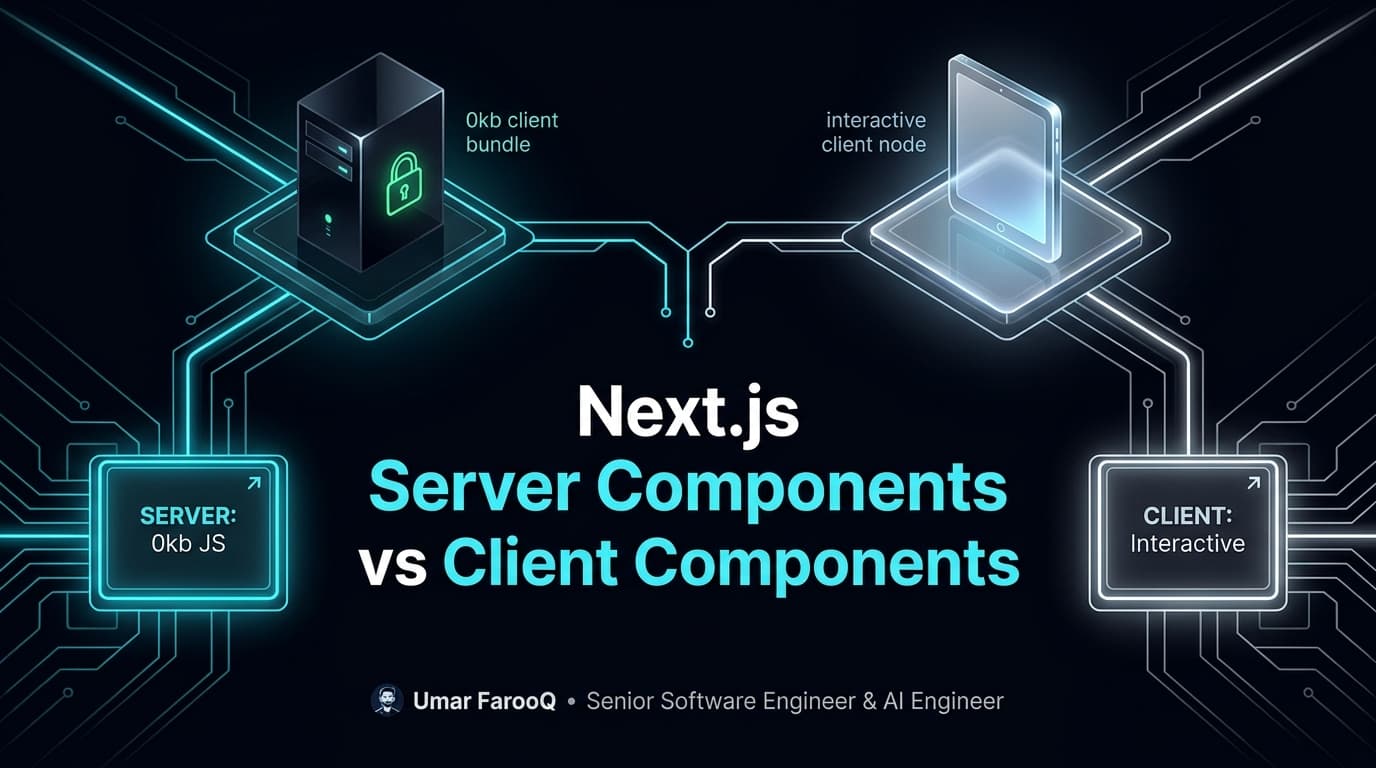
Next.js Server Components vs Client Components
Confused about where to draw the 'use client' line in Next.js? Here is a field-tested breakdown of Server vs Client components for sub-second page loads.
Laravel AI SDK: What Can You Actually Build?
Most AI tutorials stop at simple prompt completions. Here is what happens when you combine Laravel queues, database transactions, and modern AI SDKs to build real business software.