Products Are Starting to Build Themselves.
When production error logs automatically trigger AI agents that fix bugs while you sleep, the way we build and maintain software changes completely.
Umar Farooq
System Architect & Full-Stack Engineer
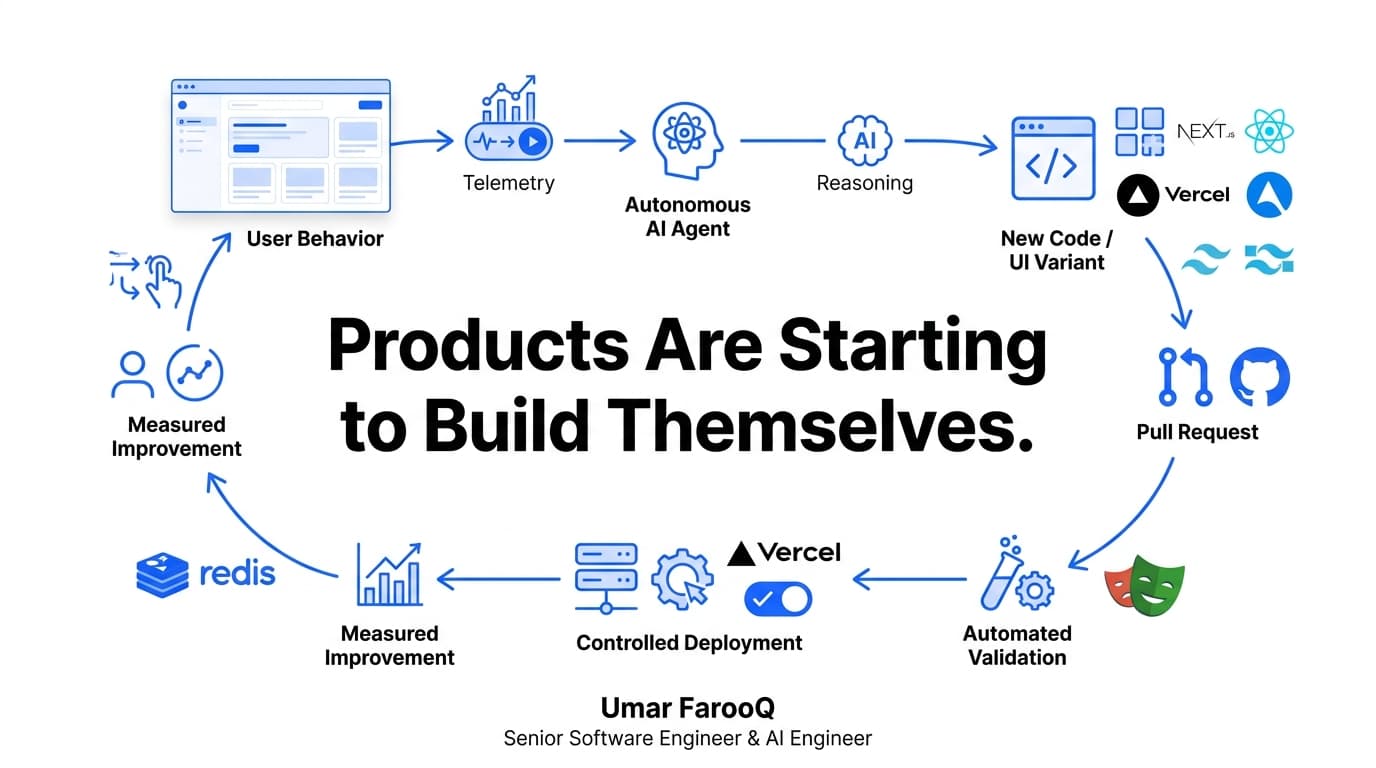
Direct Answer: Modern software products are beginning to build and optimize themselves by pairing real-time user session telemetry with autonomous generative AI agents. Instead of waiting for quarterly feature roadmaps, intelligent applications analyze navigation drop-offs, synthesize missing edge-case handlers, generate A/B UI tests, and author pull requests that optimize conversion without human prompting.
For the entire history of software engineering, codebases have been passive artifacts: static lines of text that sit in git repositories waiting for a human developer to modify them. If users struggled with a confusing checkout step, the software remained indifferent until a product manager analyzed analytics dashboards and scheduled engineering tickets.
Today, that boundary is dissolving. Having engineered automated systems and full-stack SaaS platforms across Saudi Arabia and remote tech startups, I have watched software evolve from passive code into self-optimizing digital organisms. By connecting user interaction telemetry directly to autonomous agent loops, modern applications actively participate in their own continuous improvement.
The Telemetry-to-Code Feedback Loop
The foundation of self-building software is high-resolution observability. When a user abandons a form or encounters an unexpected input validation failure, monitoring agents capture the serialized DOM state, user behavior breadcrumbs, and network responses.
According to autonomous software development research in the Anthropic Model Context Protocol Guides, feeding structured behavioral analytics back into coding agents allows the system to hypothesize UX optimizations, author candidate React components, and deploy automated canary tests autonomously.
Comparison: Manual Feature Roadmaps vs Telemetry-Driven Evolution
Here is how traditional feature development compares with self-evolving software architectures:
Development Phase | Traditional Manual Engineering Roadmap | Autonomous Telemetry-Driven Evolution |
|---|---|---|
Friction Discovery | Analyzed weeks later during monthly metric reviews | Detected in real time via automated anomaly telemetry |
Solution Design | Product team debates wireframes over multiple sprints | AI agent synthesizes three targeted UX variations |
Implementation | Developers manually write CSS classes and form handlers | Agent authors type-safe components and unit tests |
Validation Gate | Manual QA testing in staging environments | Automated Playwright synthetic testing and canary rollout |
Cycle Velocity | 4 to 8 weeks from observation to production | 24 to 48 hours with continuous metric validation |
Production Code: Telemetry-Driven Dynamic UI Adaptation
Below is a Next.js Server Action demonstrating how user interaction friction triggers automated feature adaptation in real time:
// src/server/telemetry/adaptiveFeatureRouter.ts
"use server";

import { redis } from "@/lib/redis";
import { db } from "@/lib/db";

interface FrictionSignal {
  route: string;
  fieldId: string;
  failureCount: number;
  clientError: string;
}

export async function reportFormFriction(signal: FrictionSignal) {
  const frictionKey = `friction:${signal.route}:${signal.fieldId}`;
  const count = await redis.incr(frictionKey);

  // If more than 50 users fail on the same input within 1 hour, trigger automated variant
  if (count > 50) {
    await db.uiExperiment.upsert({
      where: { key: frictionKey },
      update: { activeVariant: "SIMPLIFIED_ONE_TAP", triggeredAt: new Date() },
      create: {
        key: frictionKey,
        activeVariant: "SIMPLIFIED_ONE_TAP",
        route: signal.route,
        originalFailureRate: count,
      },
    });

    console.info(`🤖 Autonomous UX Adaptation: Deployed simplified input variant for ${signal.fieldId}`);
  }

  return { logged: true };
}
The Vital Role of Architectural Safeguards
While products can autonomously adjust micro-interactions and propose UI variants, human engineers remain essential for system governance. Autonomous feature generation must operate within strict design system token boundaries (such as Tailwind design tokens) and require human pull request approval for modifications to core database schemas or billing rules.
Frequently Asked Questions
Can an application rewrite its own database schemas?
In production, autonomous schema mutations are dangerous. Self-evolving systems should propose database migrations as pull requests with automated rollback scripts, requiring human senior engineer review before executing on production relational databases.
How do you prevent AI-generated features from looking inconsistent?
Enforce strict design token constraints using tools like Tailwind CSS and Shadcn UI primitives. When an agent is only permitted to assemble pre-approved design tokens and accessible React components, generated interfaces stay visually harmonious.
What is the biggest operational risk of self-building software?
Uncontrolled A/B test sprawl. Without automated retirement policies that clean up losing experiment branches, codebases accumulate dead conditional logic. Establishing automated branch pruning keeps repositories clean.
Summary & Strategic Vision
In production setups, these telemetry feedback loops rely on strict rate limiting and automated canary rollback triggers. Rather than deploying experimental variants blindly to the entire audience, our edge runtime provisions isolated feature flags. Telemetry collectors stream user interaction events directly into analytics pipelines, enabling the autonomous engine to measure conversion delta within minutes of activation. For deeper architecture reference, review Vercel's Edge Middleware and Telemetry Architecture. When telemetry metrics indicate a statistically significant degradation in session length or form completion rates, the agent triggers an automated git revert, notifying the engineering lead via webhook before any customer submits a complaint.
Software development is transitioning from manual artisan coding to continuous systemic curation. Applications that observe their own performance and actively propose solutions empower teams to deliver exceptional customer experiences at scale.
In our Next.js SaaS development practice and AI product and mobile practice, we build dynamic, telemetry-driven software platforms.
To learn more about our modern full-stack development methodologies, visit my About Me profile or explore our case studies on the Engineering Blog.
Interested in building intelligent, self-optimizing web platforms? Book an architecture discussion directly on my Connect page.

Umar Farooq
Author & ConsultantSpecializes in Laravel, Next.js, and AI products. 5+ years enterprise experience with 80+ delivered platforms and full source code ownership.
Related Engineering Insights
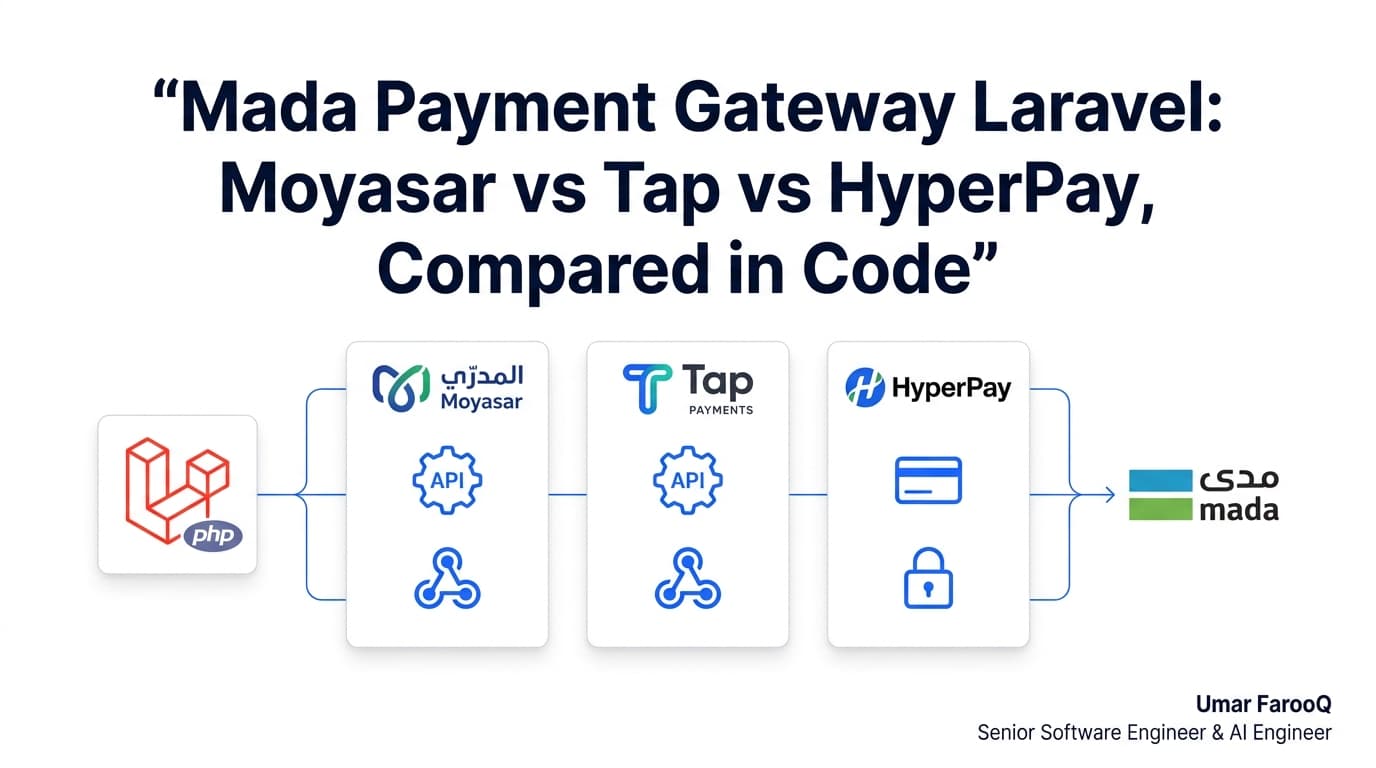
Mada Payment Gateway Laravel Comparison
Mada payment integration in Laravel compared: Moyasar, Tap and HyperPay webhook handling, Apple Pay support and sandbox quality, with production code.
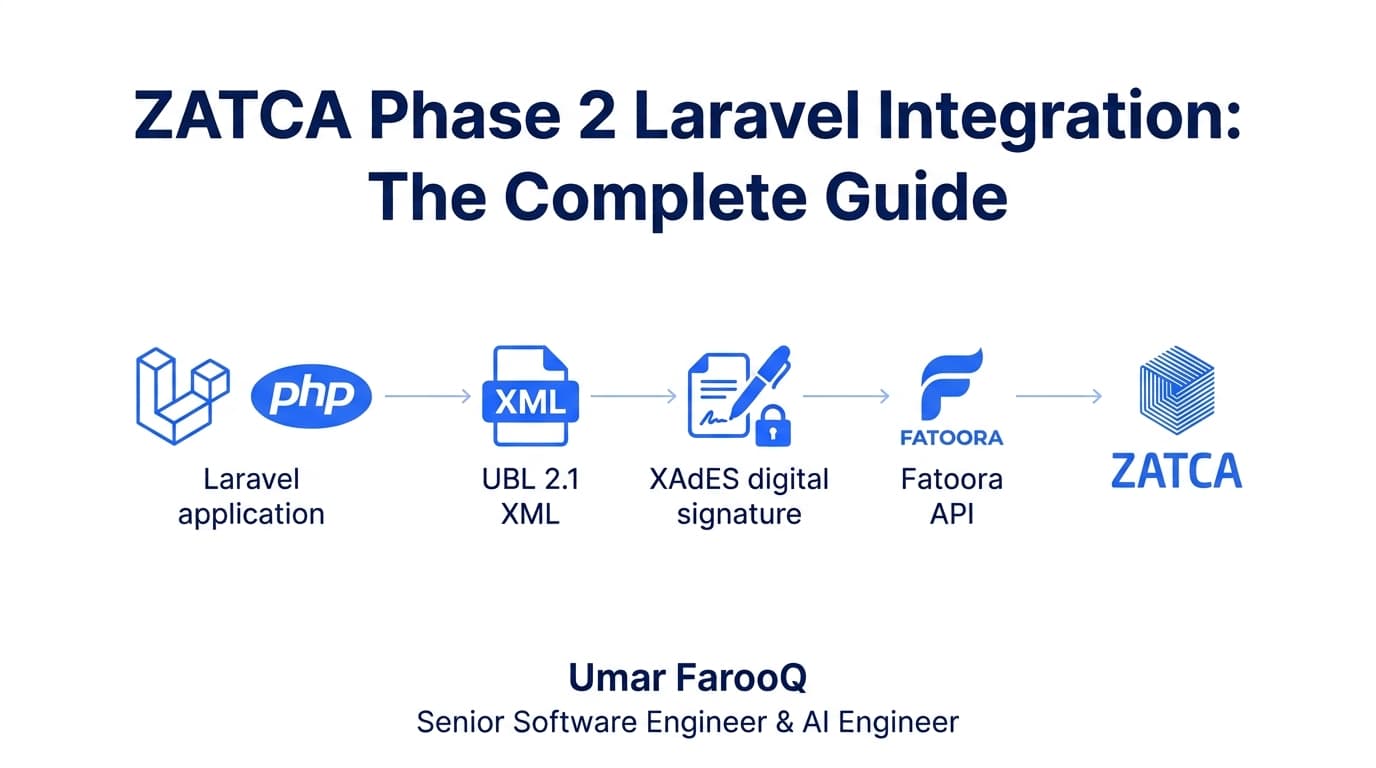
ZATCA Phase 2 Laravel Integration Guide
Master ZATCA Phase 2 e-invoicing in Laravel: clearance vs reporting, CSID onboarding, XAdES signing, and queue-based Fatoora API submission with production code.
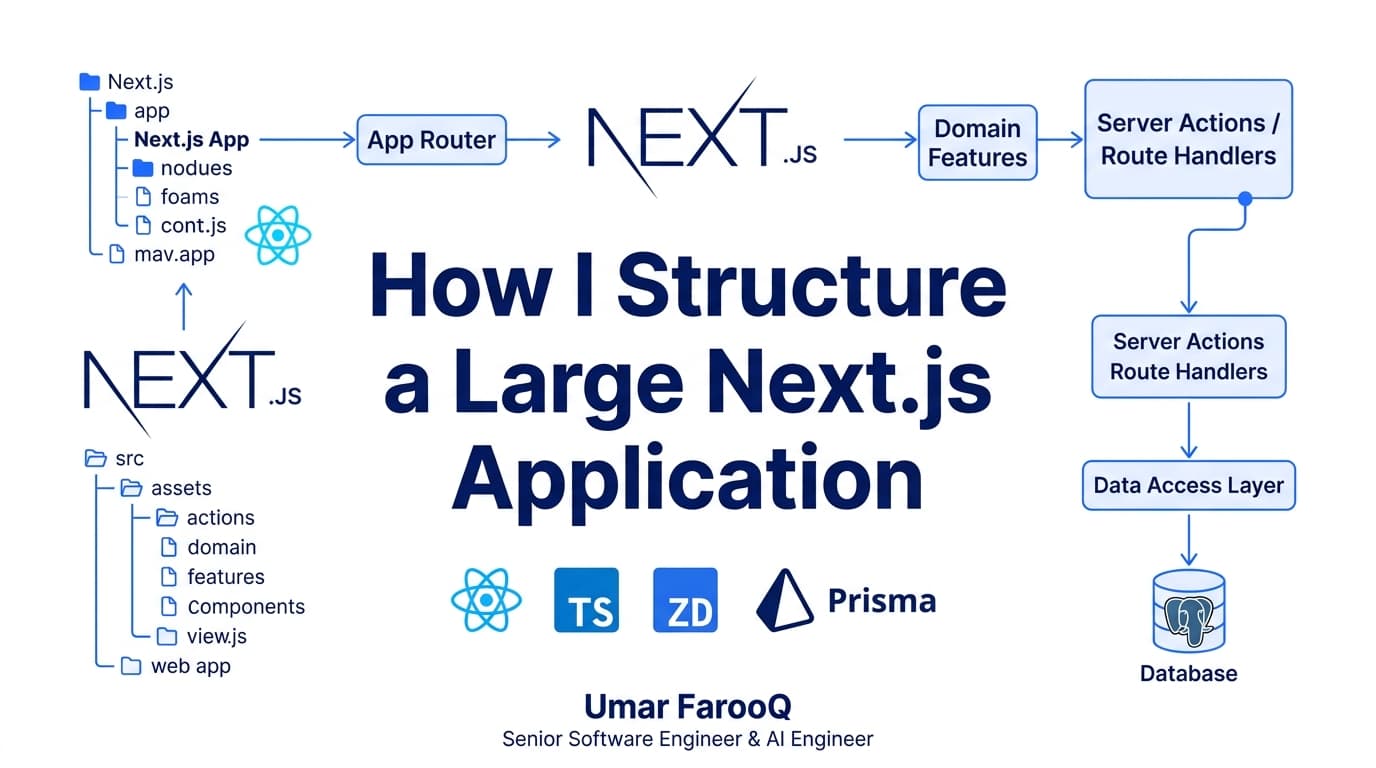
How I Structure a Large Next.js Application
As Next.js applications grow beyond a few pages, messy folder structures create circular dependencies and bloated client bundles. Here is my scalable enterprise architecture.