The Next Billion-Dollar Startup Might Have No Support Team.
Support tickets exist because software is confusing or broken. Learn how autonomous AI agents solve customer problems in real time without support desks.
Umar Farooq
System Architect & Full-Stack Engineer

Building a startup with no support team requires deterministic tool verification before any database change executes.
Direct Answer: The next billion-dollar software company might operate without a dedicated customer support team because autonomous agentic support systems solve user issues through direct database and API tool execution. Rather than deflecting queries with canned help articles, modern AI agents verify customer state, reissue failed webhooks, issue refunds, and fix configuration errors instantaneously.
In traditional technology companies, customer support has always been one of the largest operational headcount investments. As a SaaS platform scales from 1,000 to 100,000 paying accounts, support ticket volume multiplies exponentially, requiring armies of tier-1 support agents to manually answer queries, look up database records, and forward bugs to engineering.
Having built commercial SaaS applications and automated enterprise portals across Saudi Arabia and remote global teams, I have seen this operational model reach its breaking point. Support tickets are fundamentally symptoms of software friction: missing documentation, obscure error messages, or broken background jobs. Today, intelligent agents solve those root causes directly.
The Evolution from Deflection to Autonomous Resolution
First-generation customer support bots were notoriously frustrating: they matched keywords against knowledge base articles and forced users into rigid decision trees. If a customer asked, 'Why did my billing invoice fail?', the bot replied with a link to an article on credit card settings.
Modern agentic support systems operate with full tool access documented in the OpenAI Function Calling & Tool Guide. When an enterprise user asks about a failed invoice, the agent queries the Stripe API, identifies a specific bank authorization decline code, and presents an immediate one-tap retry button.
Comparison: Traditional Tier-1 Support vs Autonomous Resolution Agents
Here is how traditional support operations contrast with agentic resolution architectures:
Support Capability | Traditional Human Support Team (Tier 1/2) | Autonomous Tool-Enabled Agent Architecture |
|---|---|---|
Resolution Speed | 4 to 24 hours average ticket resolution time | Under 15 seconds real-time autonomous resolution |
Operational Cost | $15 to $40 per resolved customer support ticket | < $0.05 in LLM inference and API token consumption |
Action Execution | Agent manually requests database changes from engineering | Agent executes verified, permissioned database tools directly |
Availability | Limited by operational business hours and time zones | 24/7/365 instantaneous global availability in all languages |
Root-Cause Feedback | Manual weekly support summaries sent to product teams | Automated telemetry clustering filing GitHub issues for bugs |
Production Code: Autonomous Support Resolution Tool Loop
Below is a production TypeScript implementation of an autonomous customer support tool handler, executing safe, read-only diagnostics and transactional subscription reconciliations:
// src/server/support/supportAgentTools.ts
import { db } from "@/lib/db";
import { stripe } from "@/lib/stripe";

export async function resolveSubscriptionInquiry(userId: string) {
  const user = await db.user.findUnique({ where: { id: userId }, include: { subscription: true } });
  if (!user?.subscription?.stripeCustomerId) {
    return { status: "NO_SUBSCRIPTION", message: "User does not have an active billing record." };
  }

  // Query live payment state directly from Stripe
  const customer = await stripe.customers.retrieve(user.subscription.stripeCustomerId, {
    expand: ["subscriptions"],
  });

  const latestInvoice = (customer as any).subscriptions?.data[0]?.latest_invoice;
  if (latestInvoice && latestInvoice.status === "open") {
    return {
      status: "PAYMENT_ACTION_REQUIRED",
      invoiceUrl: latestInvoice.hosted_invoice_url,
      amountDueCents: latestInvoice.amount_due,
      message: `Your last payment of $${latestInvoice.amount_due / 100} was declined by your bank. Update payment method using the direct link.`,
    };
  }

  return { status: "ACTIVE", message: "Your subscription is active and in good standing." };
}
Enforcing Strict Guardrails and Escalation Checkpoints
An autonomous support architecture must maintain rigid permission boundaries. Agents should never possess unrestricted write permissions across production databases. High-risk actions—such as processing cash refunds exceeding $500 or deleting user accounts—must route to human executive approval queues with cryptographic audit logging.
Frequently Asked Questions
Will customers resent interacting with AI support agents?
Customers do not resent AI; they resent unhelpful deflection. When an AI agent solves an actual problem in ten seconds—such as regenerating an API key or refunding a double charge—customer satisfaction scores consistently surpass human ticket queues.
What happens when an agent cannot resolve a customer query?
The system executes a warm escalation: packaging the full conversation transcript, user session breadcrumbs, and API error logs into a prioritized ticket assigned to senior engineering or product leadership.
How does autonomous support reduce software bugs?
Agents categorize customer friction patterns quantitatively. When twenty users ask how to export a report within two hours, the agent automatically flags a UX friction ticket, allowing engineers to fix the root cause immediately.
Summary & Industry Outlook
Industry benchmarks and authoritative engineering standards validate this methodology; explore Stripe's Engineering Blog on Autonomous API Operations for in-depth technical specifications and architectural trade-offs observed in high-scale enterprise environments.
Eliminating traditional support queues is not about cutting costs; it is about delivering immediate, frictionless customer experiences. Startups that leverage autonomous agent architectures achieve unprecedented operational efficiency and customer retention.
In our AI product and mobile practice and Next.js SaaS development practice, we design autonomous customer engagement architectures.
To discover more about our software architecture standards, visit my About Me page or read through our Engineering Blog.
Planning to build a lean, high-leverage SaaS platform without heavy support overhead? Connect with me directly on my Connect page.

Umar Farooq
Author & ConsultantSpecializes in Laravel, Next.js, and AI products. 5+ years enterprise experience with 80+ delivered platforms and full source code ownership.
Related Engineering Insights
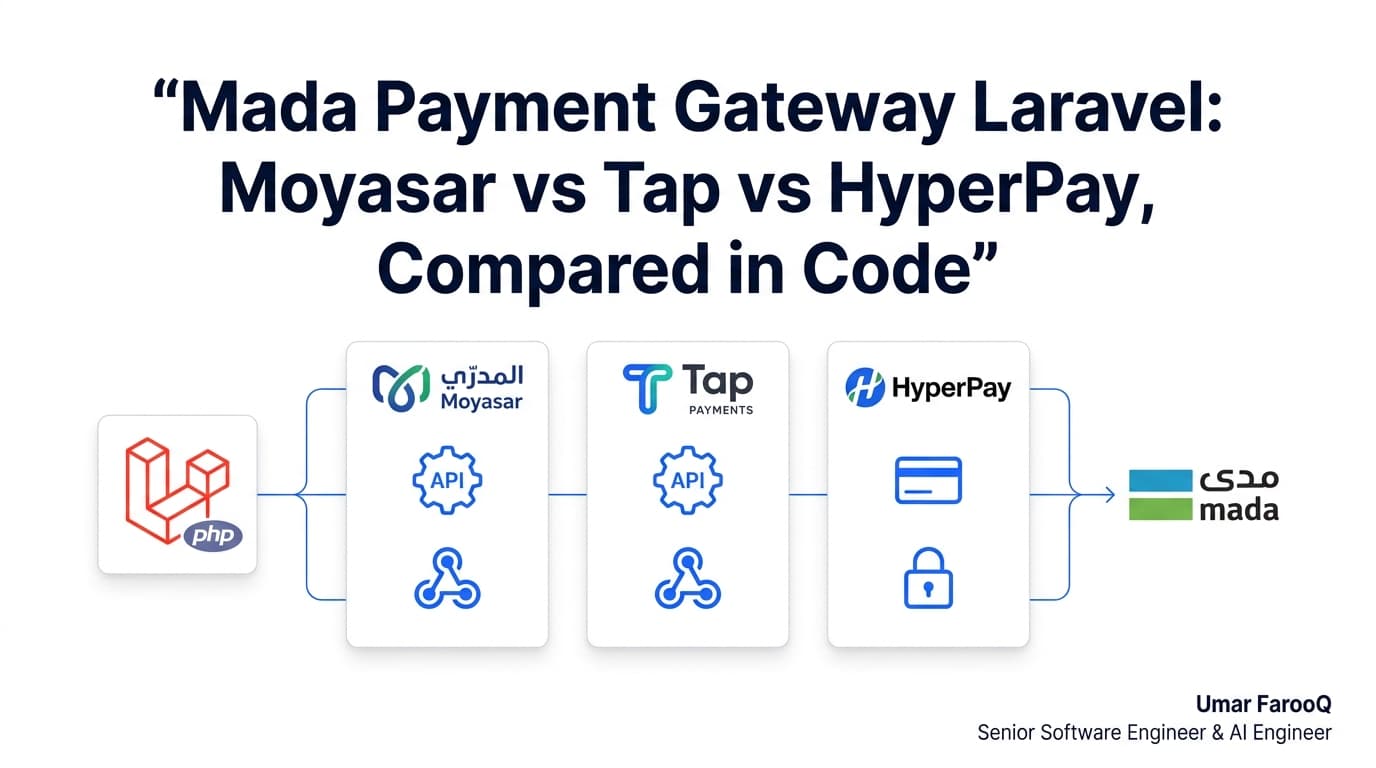
Mada Payment Gateway Laravel Comparison
Mada payment integration in Laravel compared: Moyasar, Tap and HyperPay webhook handling, Apple Pay support and sandbox quality, with production code.
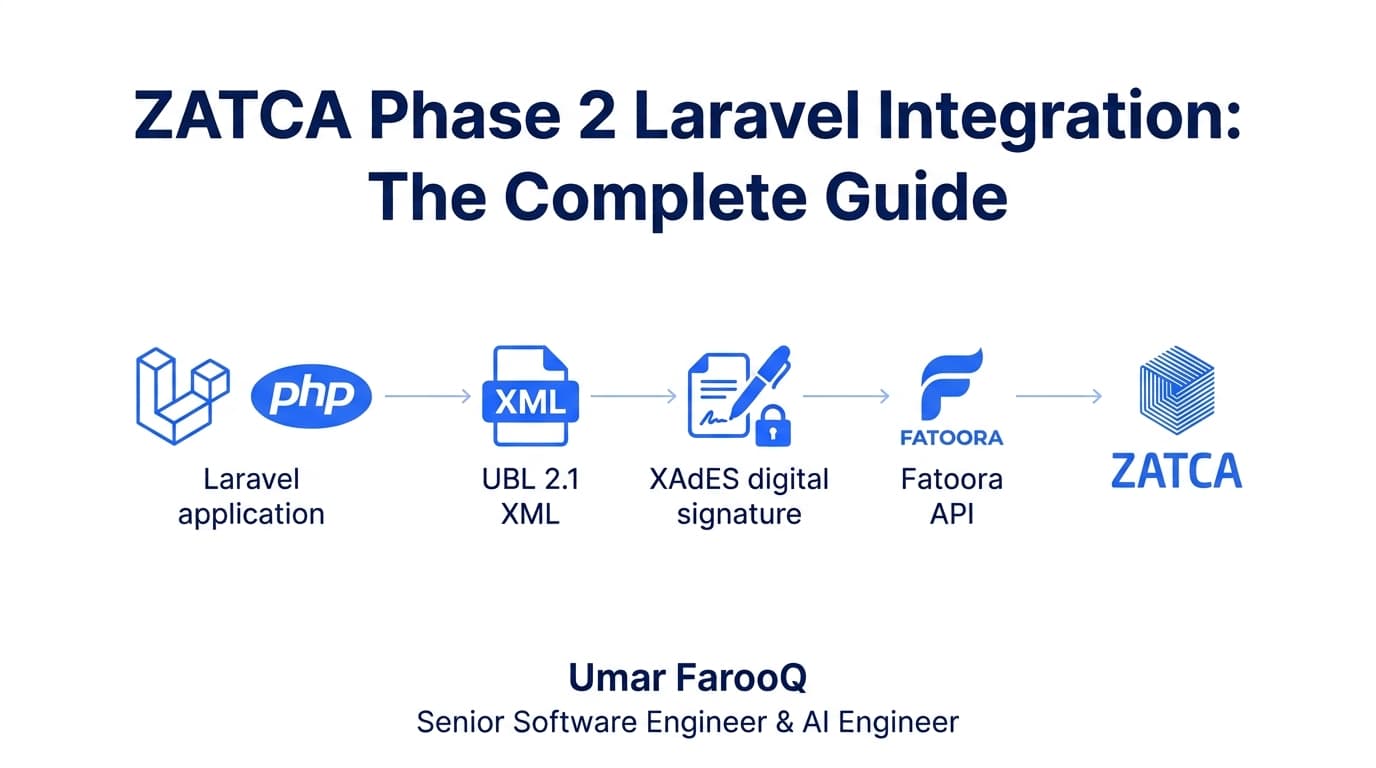
ZATCA Phase 2 Laravel Integration Guide
Master ZATCA Phase 2 e-invoicing in Laravel: clearance vs reporting, CSID onboarding, XAdES signing, and queue-based Fatoora API submission with production code.
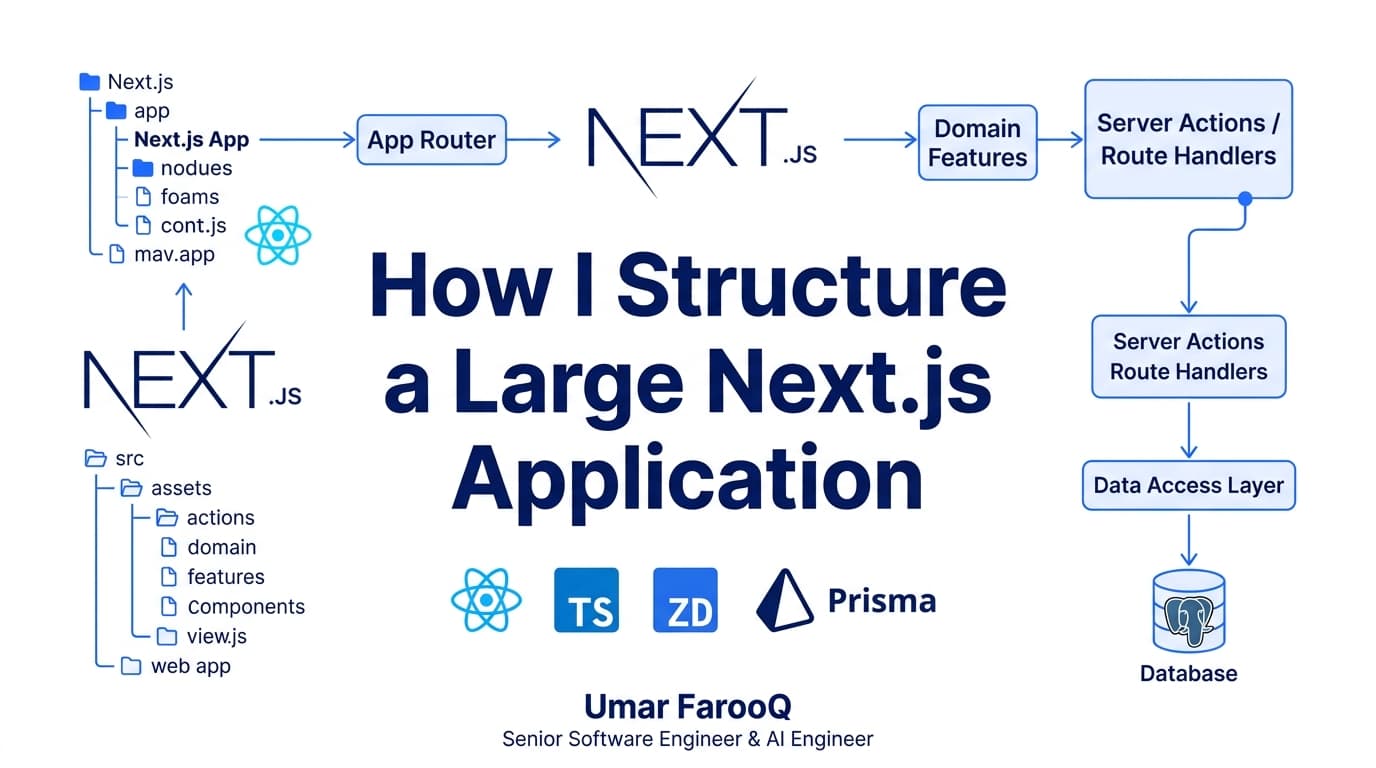
How I Structure a Large Next.js Application
As Next.js applications grow beyond a few pages, messy folder structures create circular dependencies and bloated client bundles. Here is my scalable enterprise architecture.