You Code. I Fix. Fixing a Vibe-Coded Application
Founders love how fast AI generates prototypes, until production traffic reveals race conditions, unindexed queries, and leaky auth. Here is how I audit and fix vibe-coded applications.
Umar Farooq
System Architect & Full-Stack Engineer
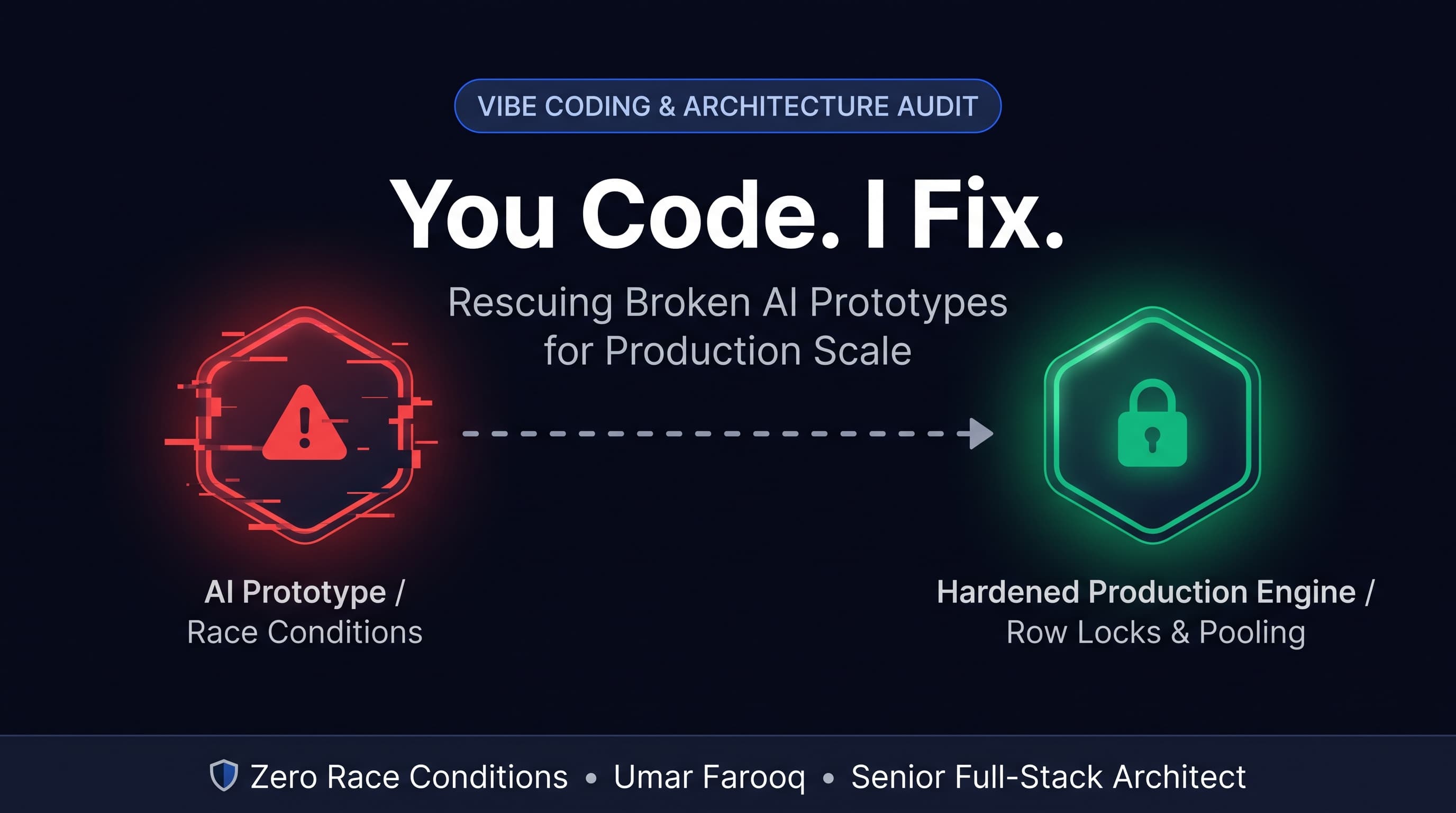
Over the past year, the barrier to building software prototypes has collapsed. With modern coding assistants, non-technical founders and product creators can describe an idea in plain English and assemble a working web application in a single weekend. This surge in developer velocity is genuinely impressive.
However, there is an uncomfortable reality that founders only discover once real customers arrive: code that works on localhost often collapses under concurrent traffic. Over the past five years architecting platforms across Saudi Arabia and remote startup ecosystems, I have been brought in to audit and rescue dozens of AI-generated prototypes that hit a technical brick wall.
AI models generate software that satisfies the happy path. They do not anticipate race conditions, memory leaks, unindexed database cascades, or hostile security attacks. That is where senior software engineering begins.
The Four Most Common Failures in Vibe-Coded Apps
When auditing an AI-generated codebase, I consistently find the same four architectural hazards hiding beneath clean-looking frontend components.
1. The Missing Row Lock (Race Conditions)
AI models almost always write financial, credit, or inventory updates as simple read-then-write sequences. When two users execute transactions simultaneously, both read the identical initial balance, calculate their new totals independently, and overwrite each other. The result is phantom stock and balance discrepancies.
2. Unindexed Relational Cascades (N+1 Queries)
A prototype tested with twenty mock records feels lightning-fast. But when deployed with 5,000 real accounts, nested database calls inside frontend render loops trigger hundreds of queries per page visit, spiking CPU usage to 100% and timing out serverless functions.
3. Leaked Service Keys and Broken Access Control
To get features working quickly, models frequently place administrative API keys inside client-accessible files or omit authorization checks on mutation endpoints, leaving backend operations vulnerable to unauthorized exploitation as documented in the OWASP API Security Top 10 Guidelines.
4. Database Connection Pool Exhaustion
Serverless deployment platforms spin up independent container instances for every concurrent request. When vibe-coded applications open direct, unpooled database connections instead of routing queries through PgBouncer or connection managers, a sudden surge of fifty visitors exhausts the database connection limit within seconds, resulting in cascading 500 error spikes.
Before and After: Fixing a Broken Credit Deduction Endpoint
Here is a common vibe-coded Next.js Server Action that fails under concurrent traffic, followed by the hardened, production-grade refactor using strict row locking documented in the PostgreSQL Explicit Locking Documentation:
// ❌ VIBE-CODED (Fragile): Race condition vulnerable & no transaction
export async function deductCreditsVulnerable(userId: string, amount: number) {
  const user = await db.user.findUnique({ where: { id: userId } });
  if (user.credits < amount) throw new Error("Insufficient credits");

  // Vulnerable window: concurrent requests read the same balance here
  return await db.user.update({
    where: { id: userId },
    data: { credits: user.credits - amount },
  });
}

// ✅ REFACTORED (Production-Ready): Atomic transaction with row lock
import { db } from "@/lib/db";

export async function deductCreditsSecure(userId: string, amount: number) {
  return await db.$transaction(async (tx) => {
    // Lock the specific user row until the transaction commits
    const [user] = await tx.$queryRaw<Array<{ id: string; credits: number }>>`
      SELECT id, credits FROM "User" WHERE id = ${userId} FOR UPDATE;
    `;

    if (!user || user.credits < amount) {
      throw new Error("Insufficient credits or user not found");
    }

    const updated = await tx.user.update({
      where: { id: userId },
      data: { credits: { decrement: amount } },
    });

    // Record immutable audit entry
    await tx.creditAuditLog.create({
      data: { userId, amountDeducted: amount, remainingBalance: updated.credits },
    });

    return updated;
  });
}
Comparison: Vibe-Coded Prototype vs Hardened Production System
Here is how prototype code differs from an application built to sustain long-term business operations:
Engineering Dimension | Vibe-Coded Prototype | Hardened Production System |
|---|---|---|
Data Mutations | Loose queries with no atomic isolation | Strict ACID transactions with pessimistic row locks |
Database Indexing | Default primary keys only | Composite, GIN, and B-Tree indexes on query paths |
Input Validation | Basic browser form checks | Runtime schema validation with Zod on the server |
Third-Party Webhooks | Blind JSON acceptance without verification | Cryptographic signature validation and idempotency keys |
System Observability | Empty console.log statements | Structured error tracing with Sentry and performance monitoring |
Database Indexing: Eliminating Full Table Scans
One of the fastest ways an AI-generated application crashes in production is missing indexes on foreign keys. When a user navigates to their dashboard, the query fetches invoices where userId equals the authenticated session id. Without a B-Tree index on the userId column, PostgreSQL executes a sequential scan across every record in the table.
With 50 users, this scan takes 2 milliseconds. With 50,000 records, the query consumes 800 milliseconds and pins database CPU usage to 100%. Before deploying any AI-assisted project, inspect your query execution plans with EXPLAIN ANALYZE and verify composite indexes on frequently filtered columns.
The Production Audit Checklist for Founders
Before you invite paying customers or launch on Product Hunt, run through this baseline engineering verification checklist:
Enforce Connection Pooling: Verify your database client routes queries through a connection pooler like PgBouncer or Supabase Pooler to prevent connection crashes under sudden traffic spikes.
Audit Environment Variables: Ensure private secret keys never carry the NEXT_PUBLIC_ prefix, preventing confidential database or Stripe credentials from leaking into public client bundles.
Add Rate Limiting to Expensive Endpoints: Place sliding-window rate limiters on AI generation and authentication endpoints to protect against runaway API bills and brute-force credential stuffing.
Verify Automated Database Backups: Confirm that point-in-time recovery and automated daily snapshots are active and tested before processing customer transactions.
Frequently Asked Questions
What is the most common bug in vibe-coded apps?
The most frequent issue is race conditions on state mutations, such as user credits or inventory updates. Generative AI models write naive read-then-write queries that lack atomic transactions and database row locks, causing data corruption and phantom balances whenever concurrent users access the endpoint simultaneously.
Can AI tools write secure database queries?
AI coding models write syntactically correct queries for basic operations, but consistently overlook database connection limits, missing indexes, and unindexed relational joins. They also fail to implement pessimistic row locking (FOR UPDATE) unless explicitly instructed by a senior software engineer who understands database concurrency.
How much does auditing a vibe-coded app cost?
An architectural security and performance audit typically takes 3 to 5 business days and costs a fraction of an emergency rebuild. Catching connection exhaustion, leaked API keys, and unindexed queries before launch prevents thousands of dollars in lost revenue and emergency downtime.
The 'You Code, I Fix' Partnership Model
You do not need to discard generative tools. Building prototypes with AI is a smart, cost-effective way to validate market demand. But before you launch to paying customers, running an architectural audit saves thousands of dollars in emergency triage.
In our Laravel full-stack engineering services and Next.js SaaS MVP development practice, we help founders take their existing prototypes, eliminate critical bottlenecks, and transform them into resilient software platforms.
To discover more about our production standards and real-world system case studies, explore my About Me page or read through the full Technical Blog Archive.
Have a vibe-coded application that is ready for real users? Book a system security and performance audit on my Connect page.

Umar Farooq
Author & ConsultantSpecializes in Laravel, Next.js, and AI products. 5+ years enterprise experience with 80+ delivered platforms and full source code ownership.
Related Engineering Insights
How I Use AI During Software Development
AI can accelerate repetitive coding tasks, but blind trust causes production outages. Here is how I integrate AI into my daily engineering workflow while maintaining strict code ownership.
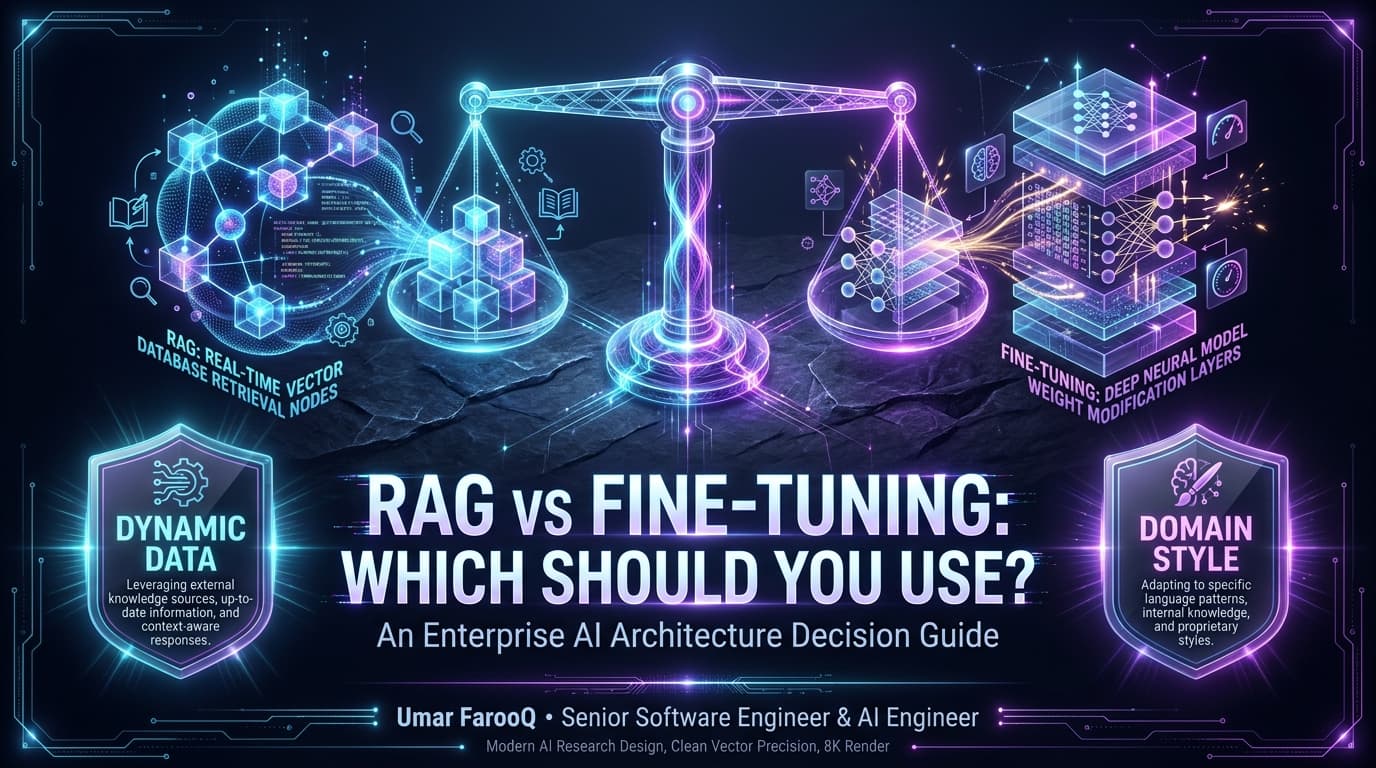
RAG vs Fine-Tuning: Which Should You Use?
Should you fine-tune an open-source LLM or build a vector RAG pipeline? Here is a practical engineering guide to cost, hallucination control, and real business requirements.
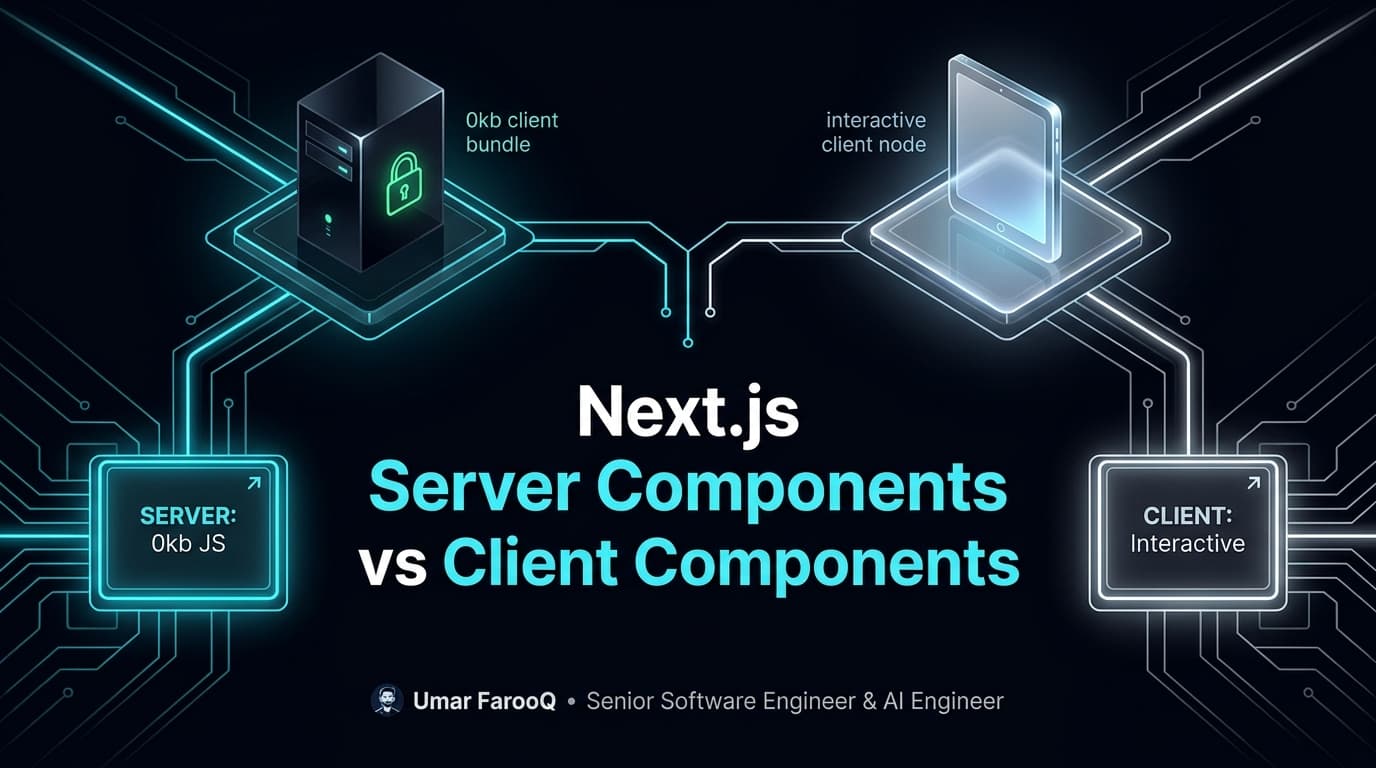
Next.js Server Components vs Client Components
Confused about where to draw the 'use client' line in Next.js? Here is a field-tested breakdown of Server vs Client components for sub-second page loads.