Your Next Software Update Won't Come From a Human
From security patches to dependency upgrades: how automated AI coding agents are fixing bugs and writing pull requests without human developers.
Umar Farooq
System Architect & Full-Stack Engineer

Direct Answer: The future of software maintenance belongs to autonomous telemetry-driven agentic pipelines. Instead of human developers manually triaging exception logs, filing Jira tickets, and writing dependency patch PRs, autonomous AI agents detect production exceptions in real time, isolate the offending commit, generate a verified code fix, run automated regression tests, and propose a ready-to-merge pull request.
For fifty years, the lifecycle of a software bug has followed an identical, manual loop: a user encounters an unexpected error in production, an entry is recorded in an observability tool like Sentry or Datadog, a human engineer is paged to investigate, the developer reproduces the issue on localhost, writes a three-line patch, and pushes a pull request through CI/CD.
In modern software development, this repetitive maintenance cycle is being automated. Having integrated autonomous coding agents and automated CI pipelines into enterprise workflows across Saudi Arabia and remote development practices, I have seen how background agents transform maintenance. The next critical software patch on your repository will likely be authored by an AI agent while your engineering team sleeps.
The Rise of Self-Healing Software Pipelines
Software maintenance accounts for over 60% of total engineering payroll in modern technology companies: bumping deprecated package dependencies, fixing broken schema migrations, and resolving null-pointer exceptions. These tasks are tedious for senior human engineers, but represent ideal workloads for autonomous agents.
By combining modern developer agent frameworks like Anthropic Claude Code Overview with GitHub Actions, an exception in production triggers an automated diagnosis pipeline: cloning the repository, checking git blame to isolate the regression, writing a reproducing unit test, and generating a validated fix.
Comparison: Traditional Bug Resolution vs Autonomous Agentic Patching
Here is how traditional maintenance workflows contrast with autonomous self-healing pipelines:
Incident Lifecycle Phase | Traditional Human Maintenance Loop | Autonomous Agentic Patch Pipeline |
|---|---|---|
Bug Detection | Discovered when user reports issue or on-call is paged | Real-time webhook alert from Sentry error telemetry |
Root Cause Triage | Human inspects stack trace and manually runs git blame | Agent maps error trace directly to offending lines of code |
Fix Implementation | Developer context-switches to write boilerplate patch | Agent authors minimal targeted patch adhering to codebase style |
Verification Gate | Manual verification or waiting for slow staging QA | Agent runs unit and integration test suite automatically |
Time to Resolution | 4 to 48 hours depending on developer availability | 5 to 15 minutes with complete automated pull request |
Production Architecture: Autonomous GitHub Action Self-Healer
Below is a production-tested GitHub Actions workflow demonstrating how an exception webhook triggers an automated agent to diagnose and open a pull request:
# .github/workflows/agentic-auto-patch.yml
name: Autonomous Error Patch Pipeline

on:
  repository_dispatch:
    types: [production_error_alert]

jobs:
  auto-patch:
    runs-on: ubuntu-latest
    steps:
      - name: Checkout Codebase
        uses: actions/checkout@v4
        with:
          fetch-depth: 0

      - name: Run Autonomous Diagnostic Agent
        env:
          ANTHROPIC_API_KEY: ${{ secrets.ANTHROPIC_API_KEY }}
          ERROR_PAYLOAD: ${{ toJson(github.event.client_payload) }}
        run: |
          node scripts/agents/autoHealer.js --payload "$ERROR_PAYLOAD"

      - name: Verify Automated Test Suite
        run: npm run test:unit

      - name: Create Automated Pull Request
        uses: peter-evans/create-pull-request@v6
        with:
          title: "fix(auto-patch): resolve production exception in billing worker"
          body: "Autonomous patch generated by AI diagnostic agent. All unit tests verified."
          branch: "auto-patch/production-fix"
The Critical Need for Human Approval Checkpoints
While automated agents are capable of authoring and testing bug fixes, production safety dictates that human tech leads retain final merge approval. Autonomous self-healing systems should not deploy code directly to live production servers without a human review of the generated git diff, ensuring that edge cases and security boundaries are respected.
Frequently Asked Questions
Can an AI agent accidentally break production?
Not if your CI/CD quality gates are properly configured. Autonomous patches must be required to pass the exact same strict TypeScript compilation, linting rules, and automated regression test suites as human code before they can even be proposed as pull requests.
What types of bugs are best suited for automated agent patching?
Dependency security patches (like Dependabot with automated testing), unhandled null/undefined checks, broken regex parsing, and simple API schema drift are ideal candidates for autonomous agent remediation.
How does autonomous patching impact developer jobs?
It eliminates the most demoralizing part of software engineering: context-switching away from creative product architecture to patch minor bugs. Engineers spend less time firefighting and more time designing core business features.
Summary & Future Outlook
Industry benchmarks and authoritative engineering standards validate this methodology; explore GitHub Universe research on automated vulnerability patching for in-depth technical specifications and architectural trade-offs observed in high-scale enterprise environments.
Autonomous self-healing software is no longer science fiction; it is rapidly becoming standard operating procedure for elite engineering organizations. Embracing automated agent workflows allows engineering teams to maintain unprecedented uptime with minimal human fatigue.
In our AI product and mobile development practice and Next.js SaaS development practice, we build next-generation software equipped with automated resiliency.
To learn more about our engineering philosophies and agentic workflows, visit my About Me profile or explore the full archive on our Engineering Blog.
Interested in building autonomous agent pipelines or modernizing your software deployment? Schedule a discussion directly on my Connect page.

Umar Farooq
Author & ConsultantSpecializes in Laravel, Next.js, and AI products. 5+ years enterprise experience with 80+ delivered platforms and full source code ownership.
Related Engineering Insights
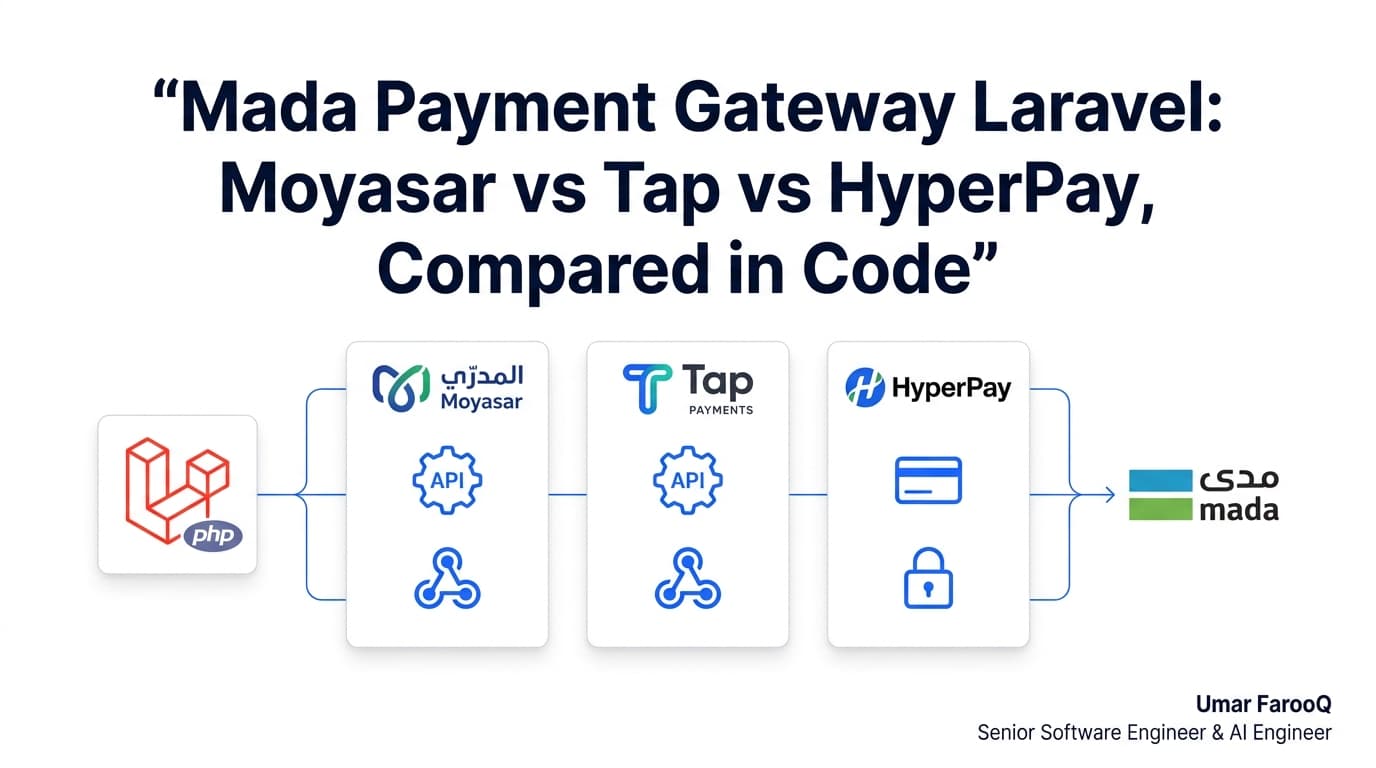
Mada Payment Gateway Laravel Comparison
Mada payment integration in Laravel compared: Moyasar, Tap and HyperPay webhook handling, Apple Pay support and sandbox quality, with production code.
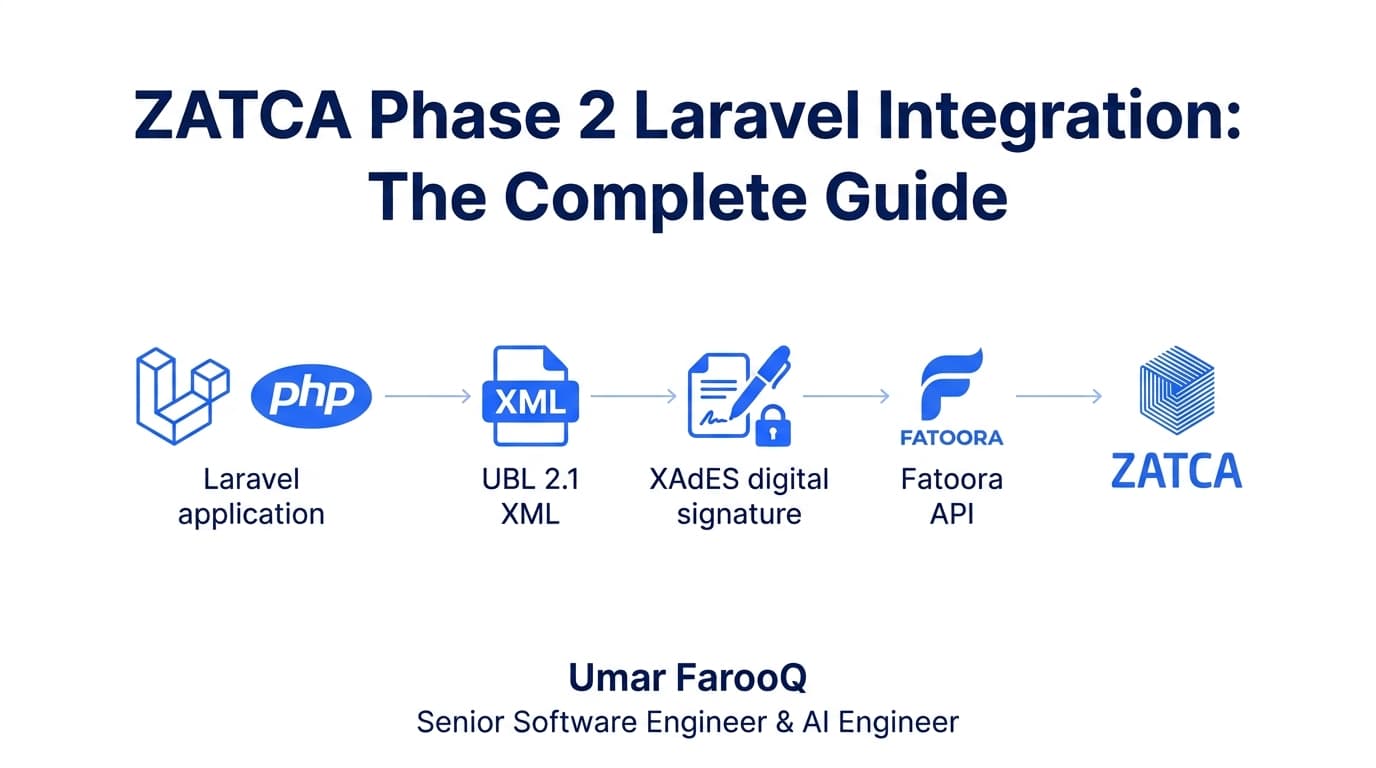
ZATCA Phase 2 Laravel Integration Guide
Master ZATCA Phase 2 e-invoicing in Laravel: clearance vs reporting, CSID onboarding, XAdES signing, and queue-based Fatoora API submission with production code.
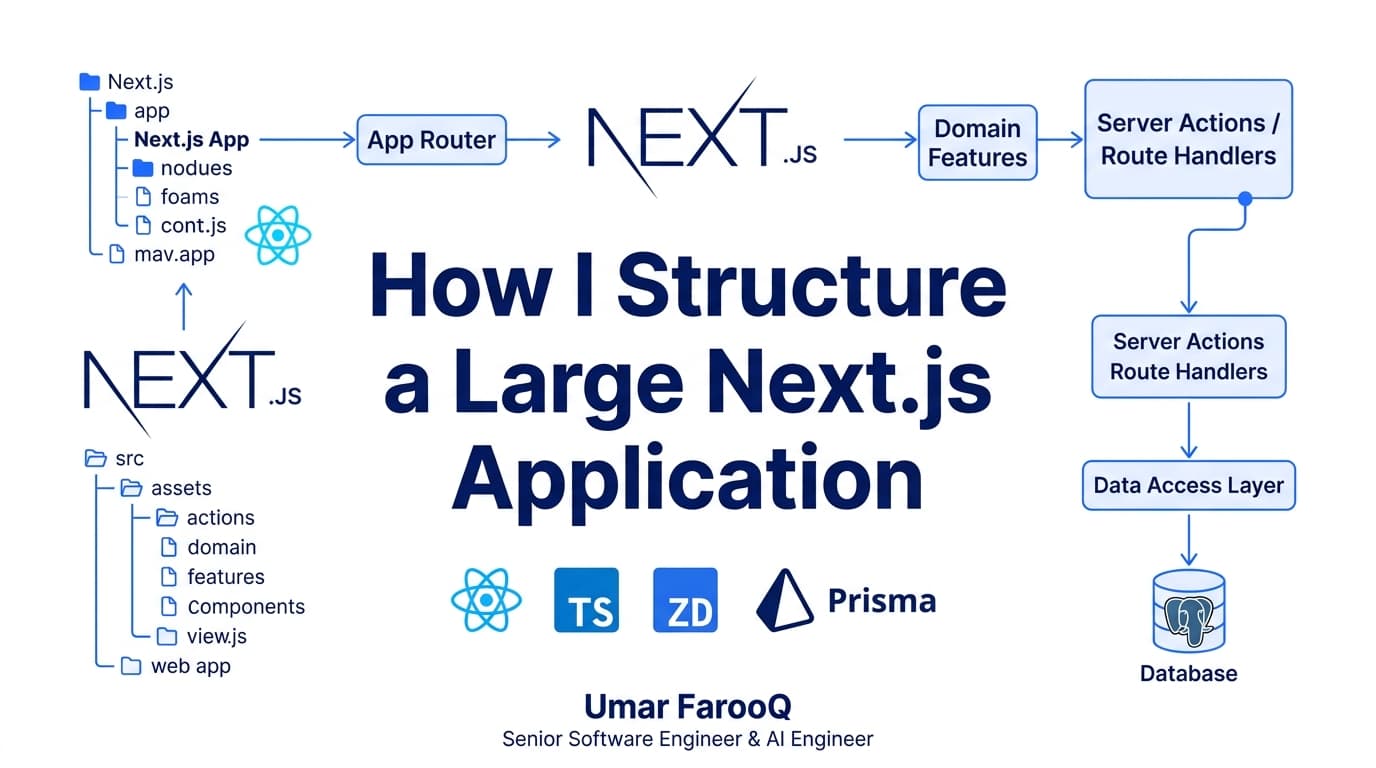
How I Structure a Large Next.js Application
As Next.js applications grow beyond a few pages, messy folder structures create circular dependencies and bloated client bundles. Here is my scalable enterprise architecture.