Your Vibe-Coded App Works. Is It Actually Production Ready?
Getting an AI-generated app to run on localhost is easy. Making it survive concurrent traffic, SQL injections, and billing webhooks is where real engineering begins.
Umar Farooq
System Architect & Full-Stack Engineer
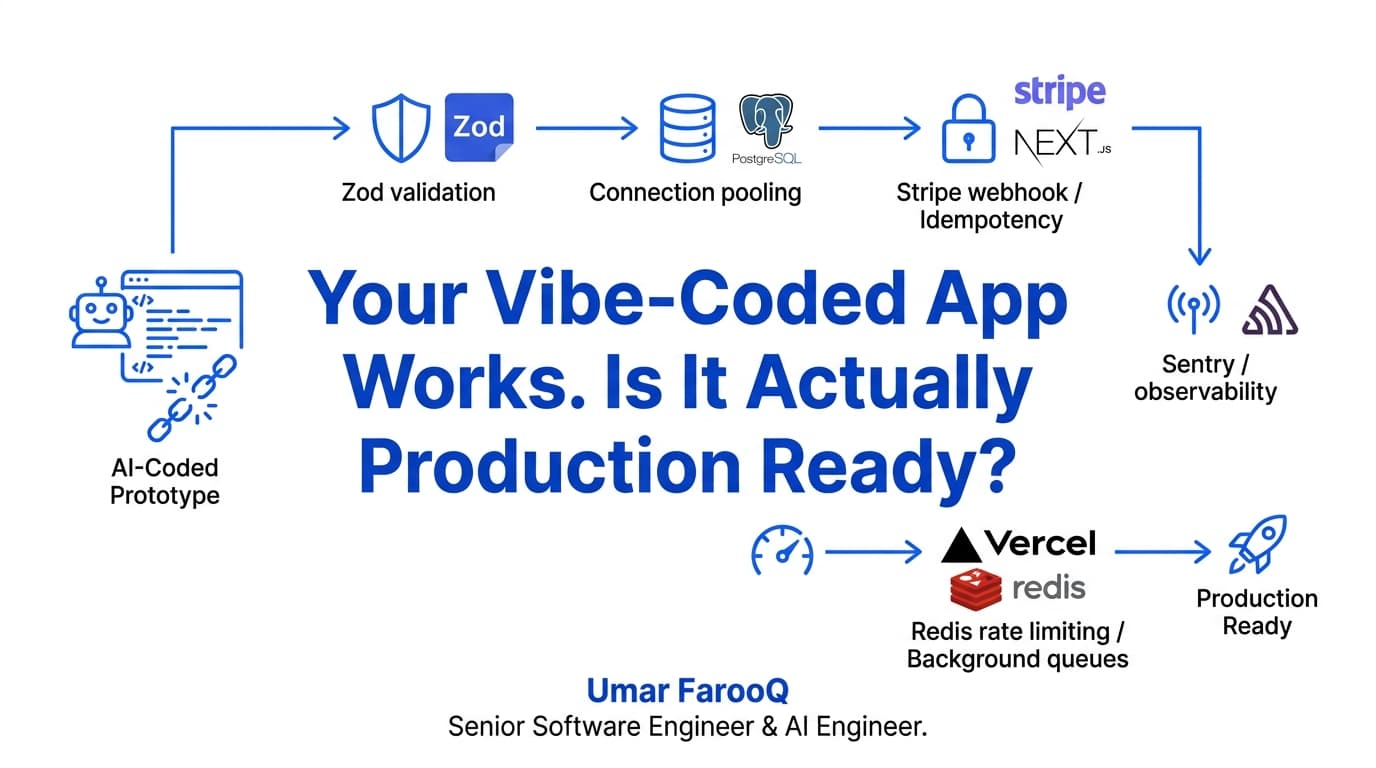
You sat down with an idea on Friday evening, opened an AI coding assistant, and by Sunday afternoon, you had a functioning SaaS application. Users can sign up, purchase subscriptions, and interact with the core dashboard. In the demo video on Twitter or LinkedIn, everything looks flawless.
Then comes your public launch.
Within thirty minutes of traffic arriving from Product Hunt or Hacker News, database connections hit their limit, checkout webhooks fire twice and double-charge customers, and error logs overflow with unhandled promise rejections. What worked seamlessly for one user on localhost begins crashing when fifty people use it simultaneously.
Making an application work once for a single user is simple. Making it work reliably 100,000 times across network drops, concurrent database locks, and malicious inputs is what separates a prototype from a production business.
The 5-Point Production Readiness Audit
Before investing money in marketing or onboarding paying enterprise customers, every vibe-coded web application must pass these five critical engineering tests.
1. Idempotent Webhook Processing
Payment providers like Stripe and Lemon Squeezy guarantee at-least-once delivery for webhooks, meaning network retries will frequently deliver the identical checkout event twice. If your endpoint increments user credits without checking an idempotency record, customers will receive duplicate upgrades.
2. Database Connection Pooling Under Serverless Load
Next.js App Router functions scale horizontally on platforms like Vercel or AWS Lambda. If each serverless instance opens a direct connection to PostgreSQL without a connection pooler like PgBouncer or Supabase Pooler, twenty concurrent visitors can easily exhaust your database limit, throwing severe 500 errors as outlined in the PostgreSQL Connection Pooling Guide.
3. Server-Side Runtime Schema Validation
Never rely on client-side form validation. Attackers can bypass browser inputs and post malformed JSON directly to your API routes. Every mutation must validate input shapes using strict runtime schemas such as Zod Schema Validation.
4. Denial-of-Service and Cost Rate Limiting
If your application includes an AI generation feature that costs you $0.03 per request, an automated script hitting your endpoint 5,000 times overnight will run up an unexpected $150 API bill before breakfast unless guarded by Redis rate limiting.
5. Atomic State Transitions
Multi-step operations—such as creating an invoice, generating a PDF, and deducting inventory—must execute inside atomic database transactions. If step two throws an exception, all previous operations must roll back automatically.
Production Code Pattern: Hardened Stripe Webhook Handler
Below is a production-grade implementation of an idempotent Stripe webhook handler with signature verification and atomic database locks:
import { headers } from "next/headers";
import { NextResponse } from "next/server";
import { stripe } from "@/lib/stripe";
import { db } from "@/lib/db";

export async function POST(req: Request) {
  const body = await req.text();
  const signature = (await headers()).get("stripe-signature");

  if (!signature || !process.env.STRIPE_WEBHOOK_SECRET) {
    return NextResponse.json({ error: "Missing webhook signature" }, { status: 400 });
  }

  let event;
  try {
    event = stripe.webhooks.constructEvent(body, signature, process.env.STRIPE_WEBHOOK_SECRET);
  } catch (err: any) {
    return NextResponse.json({ error: `Webhook Error: ${err.message}` }, { status: 400 });
  }

  if (event.type === "checkout.session.completed") {
    const session = event.data.object as any;
    const eventId = event.id;

    // Enforce idempotency: prevent duplicate processing of retried events
    const result = await db.$transaction(async (tx) => {
      const existing = await tx.processedWebhook.findUnique({
        where: { eventId },
      });
      if (existing) return { alreadyProcessed: true };

      // Record event ID immediately inside transaction
      await tx.processedWebhook.create({
        data: { eventId, eventType: event.type },
      });

      // Safely fulfill purchase
      await tx.userSubscription.upsert({
        where: { userId: session.metadata.userId },
        update: { status: "active", stripeCustomerId: session.customer },
        create: {
          userId: session.metadata.userId,
          status: "active",
          stripeCustomerId: session.customer,
        },
      });

      return { success: true };
    });

    if (result.alreadyProcessed) {
      return NextResponse.json({ message: "Event previously handled" });
    }
  }

  return NextResponse.json({ received: true });
}
Prototype vs Production Checklist Matrix
Compare your application's current architecture against enterprise standards:
Component Area | Vibe-Coded Prototype | Production-Hardened System |
|---|---|---|
Payment Webhooks | Blind processing (vulnerable to duplicate charges) | Cryptographic verification + Idempotent event tables |
Database Connections | Direct pool-less connection strings | PgBouncer / Supabase connection pooling layer |
Form Inputs | Client-side HTML5 attributes only | Strict server-side Zod schema validation |
Rate Limiting | None (open to API abuse and runaway bills) | Upstash Redis sliding-window rate limiters |
Background Tasks | Synchronous blocking HTTP calls | Redis Horizon queues with automated failure retries |
Observability: Moving Beyond Empty Console Logs
Vibe-coded prototypes almost always handle errors with empty try/catch blocks or unadorned console.log statements. When a user in another time zone encounters a silent failure during checkout, you have zero stack traces, no user context, and no breadcrumbs to reconstruct the incident.
Integrating structured error monitoring with Sentry or OpenTelemetry captures the exact line number, request payload, authenticated user ID, and runtime environment. You receive real-time notifications before your customer even files a support ticket.
Frequently Asked Questions
Why do AI-generated apps crash under traffic?
Prototypes usually crash because serverless functions exhaust direct database connection limits under concurrent traffic. Without a dedicated connection pooler like PgBouncer, each concurrent request spawns a separate database connection, quickly exceeding connection limits and triggering cascading 500 error spikes across your infrastructure.
How do I prevent double-charging on webhooks?
Payment providers like Stripe guarantee at-least-once webhook delivery, meaning network retries will frequently deliver identical events multiple times. You must store processed webhook event IDs inside an idempotent database table within an atomic transaction, rejecting duplicate payloads before fulfilling subscriptions or crediting customer accounts.
What is the first thing to check before launch?
Verify that your database credentials, private API secrets, and webhook signing keys are never exposed in client bundles with public environment prefixes. Immediately after securing secrets, configure sliding-window rate limiters on authentication and AI generation endpoints to prevent malicious denial-of-service billing spikes.
Summary & Recommendation
Generative coding tools are incredible for testing product concepts and validating customer demand quickly. But converting an interactive prototype into a dependable commercial enterprise requires experienced engineering discipline.
In our Next.js SaaS MVP development services and AI applications and mobile practice, we specialize in taking early-stage software and auditing it for database performance, security, and scalability.
To review our verified enterprise track record across manufacturing and SaaS platforms, explore my About Me profile or read our full archive of engineering essays on the Technical Blog Hub.
Ready to turn your prototype into a revenue-generating, production-ready asset? Book an architecture review on my Connect page.

Umar Farooq
Author & ConsultantSpecializes in Laravel, Next.js, and AI products. 5+ years enterprise experience with 80+ delivered platforms and full source code ownership.
Related Engineering Insights
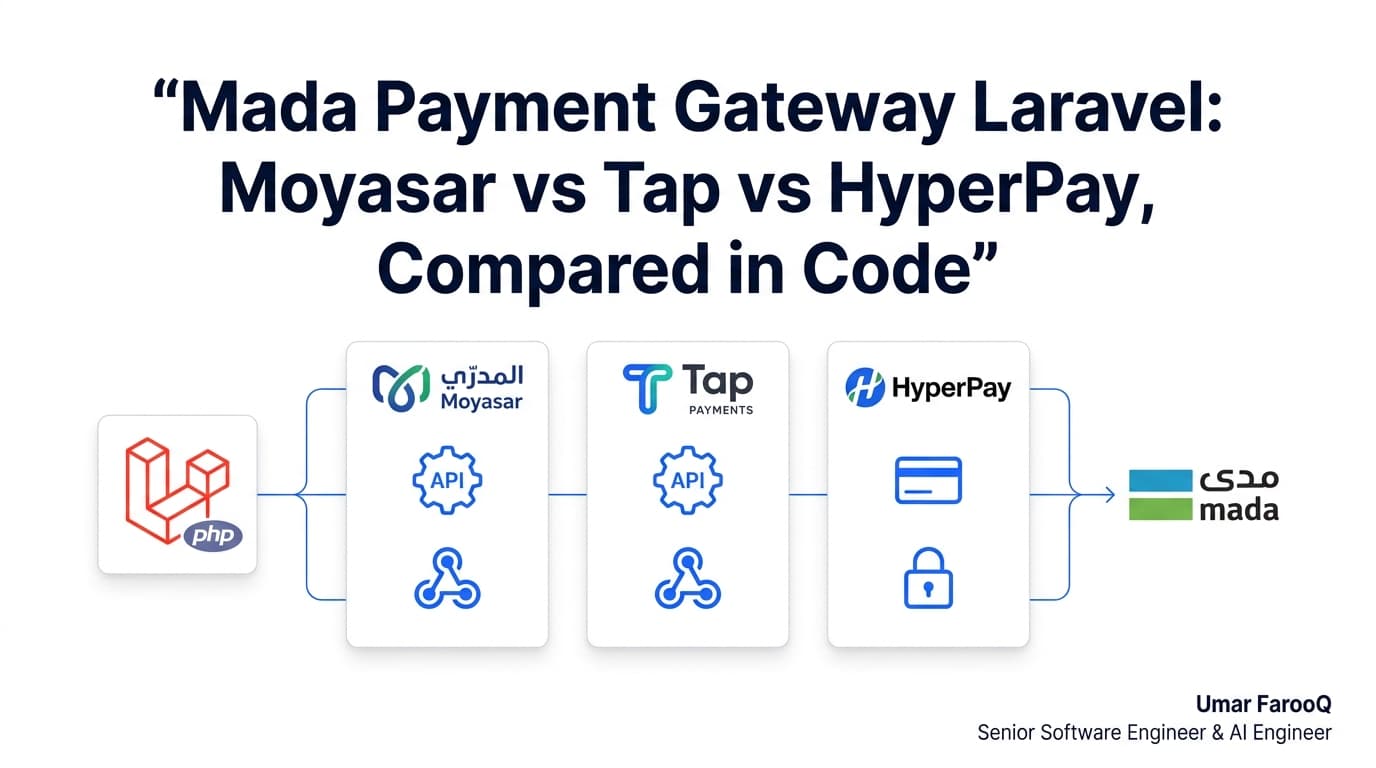
Mada Payment Gateway Laravel Comparison
Mada payment integration in Laravel compared: Moyasar, Tap and HyperPay webhook handling, Apple Pay support and sandbox quality, with production code.
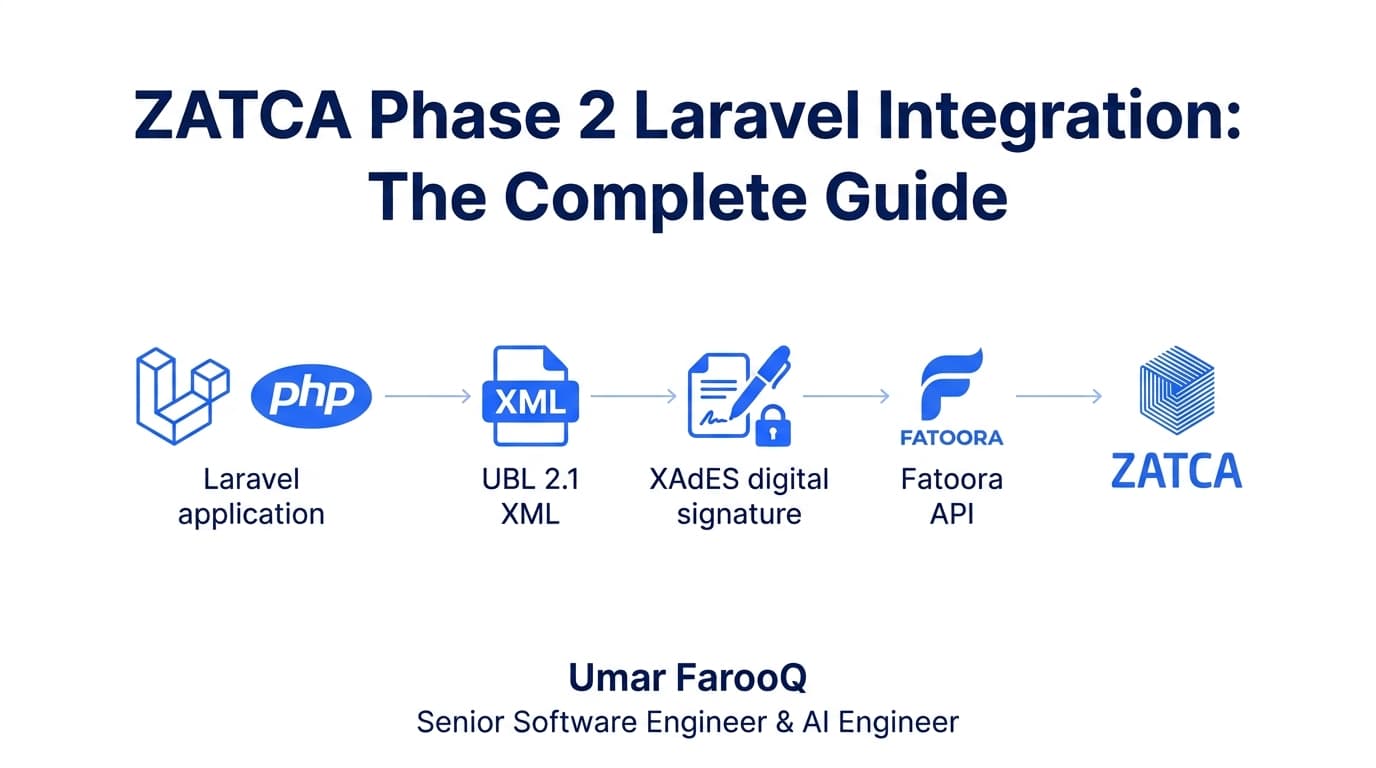
ZATCA Phase 2 Laravel Integration Guide
Master ZATCA Phase 2 e-invoicing in Laravel: clearance vs reporting, CSID onboarding, XAdES signing, and queue-based Fatoora API submission with production code.
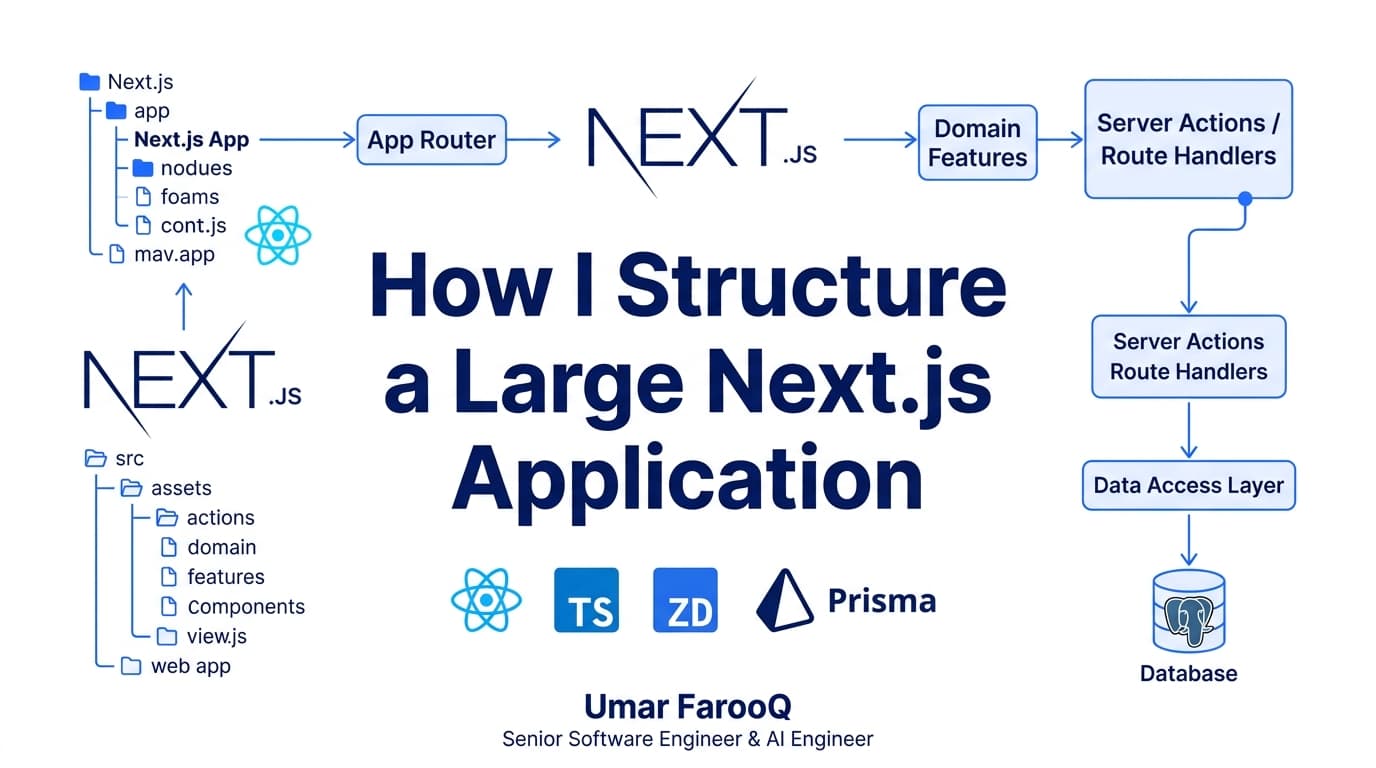
How I Structure a Large Next.js Application
As Next.js applications grow beyond a few pages, messy folder structures create circular dependencies and bloated client bundles. Here is my scalable enterprise architecture.